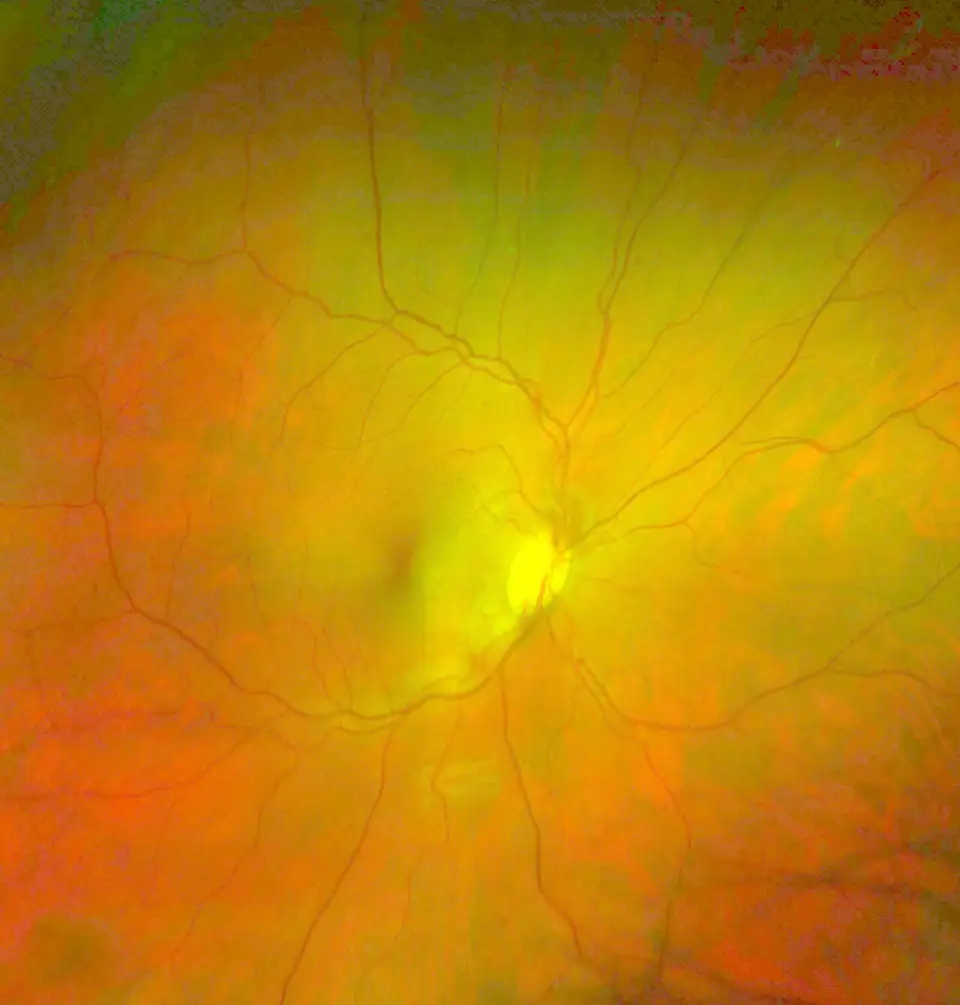
Proteomic Profile in Retinopathy of Prematurity: A Secondary Analysis of the Mega Donna Mega Randomized Clinical Trial
OftalmologiaPor ScienceMed · · a partir do resumo dos autores
Resumo original em inglês
O que aconteceu
Identifying early proteomic profiles in infants who develop severe retinopathy of prematurity (ROP) may reveal targets for preventive interventions to reduce retinal vessel loss and the subsequent risk of severe ROP.
To assess early longitudinal profiles of blood protein levels in preterm infants with or without severe ROP and the effect of arachidonic acid (AA) and docosahexaenoic acid (DHA) supplementation.
This was an exploratory, post hoc analysis of serum proteome profiles in preterm infants in the double-masked Mega Donna Mega (MDM) randomized clinical trial using targeted Olink Proximity Extension Assay proteomics covering 538 analytes. The setting was 3 university hospitals in Sweden and included extremely preterm infants born before 28 weeks of gestational age (GA), from 2016 to 2019. Data were analyzed from January to March 2025.
All infants received standard nutrition; additionally, half received enteral lipid supplementation with AA/DHA (100/50 mg/kg per day) from birth to term equivalent age.
ClinicalTrials.gov Identifier: NCT03201588.
O que encontraram
Longitudinal protein profiles during the first month of life were examined using mixed models for repeated measures, adjusted for GA, study center, and AA/DHA supplementation, and tested for the interaction between severe ROP (stage ≥3 and/or treated) and postnatal age.
A total of 177 extremely preterm infants (mean [SD] GA, 25.6 [1.4] weeks; 100 male [56.5%]) were included, of whom 50 (28.2%) developed severe ROP. Of 538 longitudinal analyzed proteins, 109 protein profiles in the first month of life associated with severe ROP, proteins related to immune response, apoptotic processes, blood coagulation, and lipid metabolism. The most pronounced association with severe ROP was a fast rise in fibroblast growth factor 21 (FGF-21; β = 0.68; 95% CI, 0.39-0.97; Q =.002) and tissue plasminogen activator (tPA; β = 0.21; 95% CI, 0.13-0.29; Q <.001) during the first postnatal days. The increase in serum FGF-21 level in the first week of life was associated with lower GA, lower birth weight, low enteral energy intake, and more days receiving mechanical ventilation. No association was observed between AA/DHA supplementation and the proteome.
Por que isso importa
In this post hoc exploratory analysis of data from the MDM randomized clinical trial, a fast rise in FGF-21 levels, a metabolic stress-induced hormone, during the first postnatal days was strongly associated with the development of severe ROP in extremely preterm infants. These findings suggest that early interventions improving bioenergetic status may help prevent severe ROP.
Resumo publicado sob licença CC BY. A tradução para o português ainda não chegou a este estudo.
O estudo original
Proteomic Profile in Retinopathy of Prematurity: A Secondary Analysis of the Mega Donna Mega Randomized Clinical Trial
Pia Lundgren, Hanna Danielsson, Mohit B Panwar, María Bueno Álvez, Aldina Pivodic, Wen Zhong, Nele Brusselaers, Dirk Wackernagel, Ulrika Sjöbom, Karin Sävman et al.
Descritores MeSH
- Retinopathy of Prematurity
- Proteome
- Proteomics
- Blood Proteins
- Gestational Age
- Humans
- Infant, Newborn
- Male
- Biomarkers
- Arachidonic Acid
Veja também
Estudos relacionados
- Perfis proteicos séricos precoces associados a displasia broncopulmonar em prematuros extremos
- Características plaquetárias em prematuros extremos após suplementação de ácidos graxos: ensaio controlado randomizado
- Role of the EPA: DHA dosing ratio in omega-3 supplements on blood fatty acid profiles and inflammation: a systematic review and meta-analysis
- Circulating Proteomics and Risk of Atrial Fibrillation: A Systematic Review of Cohort Studies
- Dexametasona Colírios para Prevenir Retinopatia da Prematuridade Requerente de Tratamento: O Ensaio Clínico Randomizado DROPROP