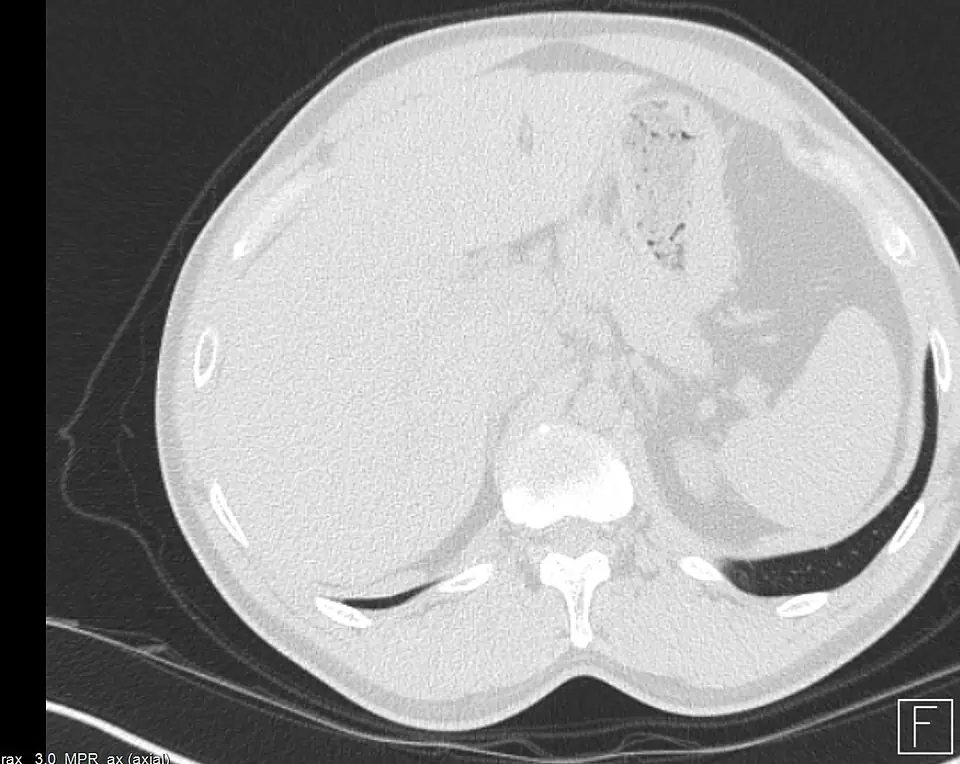
Diagnostic Accuracy of [18F]FDG PET/CT versus CT for NSCLC Surveillance: Secondary Analysis of a Randomized Clinical Trial
OncologiaPor ScienceMed · · a partir do resumo dos autores
Resumo original em inglês
O que aconteceu
Following curative treatment for non-small cell lung cancer (NSCLC), surveillance to detect recurrence is recommended. While computed tomography (CT) is the current standard for follow-up imaging, the optimal surveillance strategy remains debated. This study compares the diagnostic accuracy of fluorine-18 fluorodeoxyglucose positron emission tomography/computed tomography ([18F]FDG PET/CT; hereafter referred to as PET/CT) and CT for NSCLC surveillance.
This study represents a secondary analysis of data from a randomized controlled trial (SUPE_R, ClinicalTrials.gov NCT03740126) of patients with stage IA-IIIC NSCLC who completed curative-intent treatment between February 2019 and February 2022. CT and PET/CT scans were compared for recurrence detection using biopsy, multidisciplinary team assessment, or follow-up imaging as reference standards.
O que encontraram
The analysis included 899 PET/CT scans and 852 CT scans from 692 patients (mean age 69 years ± 8 [SD]; 412 female). For detecting recurrence, PET/CT demonstrated a higher sensitivity (88% [95% CI, 80%-93%] vs. 62% [95% CI, 50%-73%]; P < .001) but lower specificity (89% [95% CI, 86%-91%] vs. 96% [95% CI, 94%-97%]; P < .001) compared to CT. PET/CT demonstrated a higher sensitivity compared to CT after treatment with chemoradiotherapy (100% [95% CI, 72%-100%] vs. 46% [95% CI, 19%-75%]; P = .006) and at 0 to 6 month after treatment (83% [95% CI, 63%-94%] vs. 41% [95% CI, 21%-65%]; P = .008).
Por que isso importa
The higher sensitivity of PET/CT, particularly after chemoradiotherapy and early post-treatment, suggests it may be particularly valuable in these high-risk scenarios. However, CT remains preferred for routine surveillance of low-risk patients given its superior specificity.
Resumo publicado sob licença CC BY. A tradução para o português ainda não chegou a este estudo.
O estudo original
Diagnostic Accuracy of [18F]FDG PET/CT versus CT for NSCLC Surveillance: Secondary Analysis of a Randomized Clinical Trial
Kasper Foged Guldbrandsen, Martin Bloch, Kristin Skougaard, Elisabeth Albrecht-Beste, Hanne Marie Nellemann, Martin Krakauer, Peter Michael Gørtz, Julie Marie Grüner, Joan Fledelius, Anne Lerberg Nielsen et al.
Descritores MeSH
- Fluorodeoxyglucose F18
- Carcinoma, Non-Small-Cell Lung
- Lung Neoplasms
- Neoplasm Recurrence, Local
- Tomography, X-Ray Computed
- Positron Emission Tomography Computed Tomography
- Radiopharmaceuticals
- Male
- Aged
- Middle Aged
Veja também
Estudos relacionados
- Surveillance With Fluorine-18 Fluorodeoxyglucose Positron Emission Tomography/Computed Tomography of Patients With Stage I-to-III Lung Cancer After Completion of Curative treatment (SUPE_R): A Randomized Controlled Trial
- Diagnostic Accuracy of F18-fluorodeoxyglucose Positron Emission Tomography- computed Tomography for the Detection of Non-small Cell Lung Cancer Recurrence: A Systematic Review and Meta-analysis
- The diagnostic and predictive efficacy of 18F-FDG PET/CT metabolic parameters for EGFR mutation status in non-small-cell lung cancer: A meta-analysis
- Superioridade prognóstica dos parâmetros volumétricos de PET (MTV e TLG) sobre SUV em câncer avançado de pulmão de não pequenas células: uma revisão sistemática e metanálise de evidência univariada e multivariada