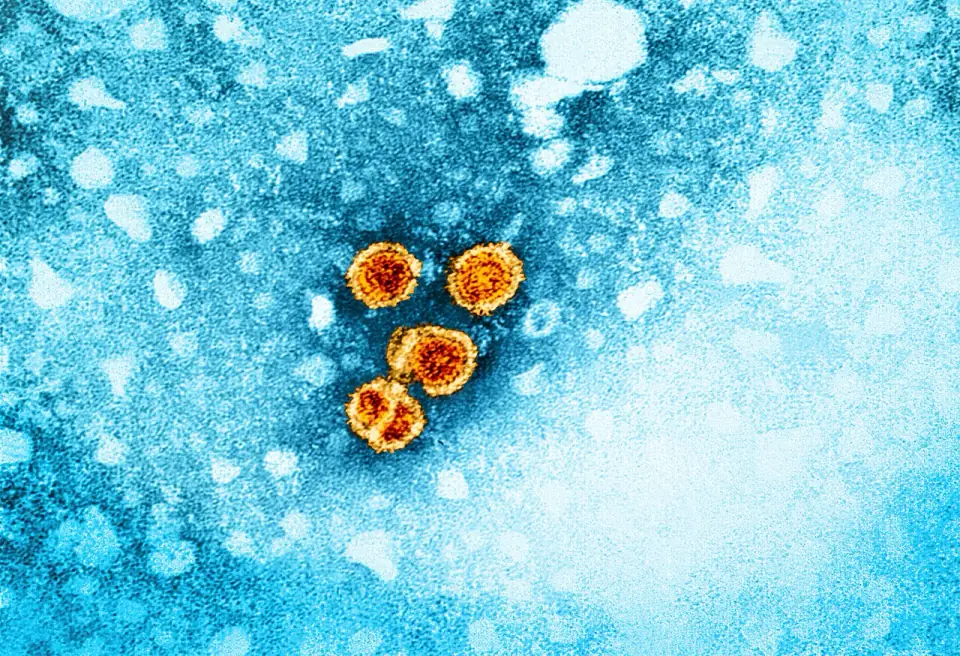
Vaccination Schedule and Age Influence Impaired Responsiveness to Hepatitis B Vaccination: A Randomized Trial in Central Asia
GastroenterologiaPor ScienceMed · · a partir do resumo dos autores
Resumo original em inglês
O que aconteceu
Vaccination against hepatitis B virus (HBV) is the most cost-efficient measure to prevent infection. Still, vaccination coverage among adults in Central Asia, including Kyrgyzstan, remains suboptimal, and data about immune responses to HBV vaccination are lacking. HBV vaccination is given as three injections, whereby the second and third doses are given 1 and 6 months after the first (0-1-6 scheme). However, compliance with the third dose is low in Kyrgyzstan, presumably due to the long time interval between the second and third doses, suggesting that a shortened vaccination schedule could result in better adherence and increased seroconversion. Thus, we conducted a randomized trial of individuals aged 17-66 years comparing the 0-1-6 scheme against a shorter 0-1-3 scheme. Primary outcome measures were post-vaccination titers and the percentage of participants with protective post-vaccination titers (≥10 mIU/mL). Compliance with the completeness of blood draws and administered third vaccine dose was better with the 0-1-3 scheme than with the 0-1-6 scheme. In both study arms combined, younger age (<40 years) was associated with better vaccine protection. The 0-1-6 scheme resulted in higher post-vaccination titers (52 versus 15 mIU/mL, p = 0.002) and a higher seroprotection rate (85% versus 64%, p = 0.01) than the 0-1-3 scheme, whereby post-vaccination titers correlated negatively with age in the 0-1-3 scheme. Thus, the 0-1-6 scheme should continue to be the preferred HBV vaccination schedule, but interventions to improve compliance with the third vaccine dose are needed.
Resumo publicado sob licença CC BY. A tradução para o português ainda não chegou a este estudo.
O estudo original
Vaccination Schedule and Age Influence Impaired Responsiveness to Hepatitis B Vaccination: A Randomized Trial in Central Asia
Janyn Heisig, Zuridin Sh Nurmatov, Peggy Riese, Stephanie Trittel, Gulsunai J Sattarova, Saikal N Temirbekova, Gulnara Zh Zhumagulova, Zhanylai N Nuridinova, Aisuluu A Derkenbaeva, Bubuzhan K Arykbaeva et al.
Descritores MeSH
- Immunization Schedule
- Vaccination
- Hepatitis B Vaccines
- Hepatitis B
- Female
- Hepatitis B Antibodies
- Hepatitis B virus
- Humans
- Male
- Middle Aged
Veja também
Estudos relacionados
- Immunogenicity, Safety, and Persistence Induced by Triple- and Standard-Strength 4-Dose Hepatitis B Vaccination Regimens in Patients Receiving Hemodialysis
- Immunogenicity of a Birth Dose of Hepatitis B Vaccine in Kinshasa, Democratic Republic of Congo: A Randomised, Controlled Trial
- Evaluation of recent pre-booster studies on hepatitis B vaccine effectiveness across WHO regions with HBV prevalence above 1% in the general population up to 60 years of age: a systematic review
- Long-Term Immunity and Anamnestic Response Following Hepatitis B Vaccination: A Systematic Review and Meta-Analysis