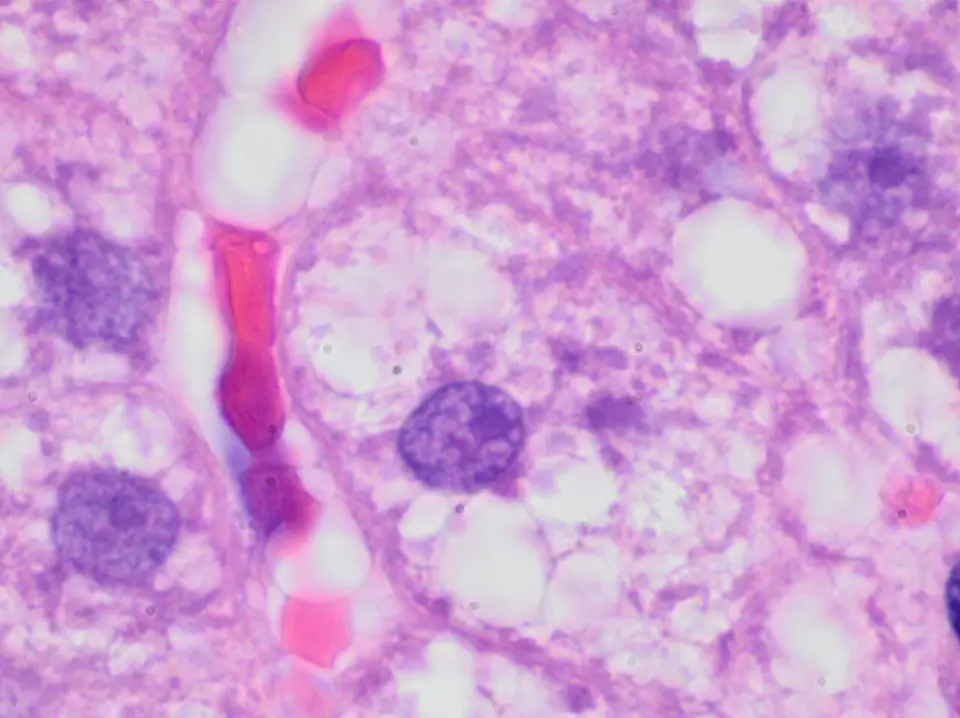
Therapeutic potential of Akkermansia muciniphila in non-alcoholic fatty liver disease: a systematic review
GastroenterologiaPor ScienceMed · · a partir do resumo dos autores
Resumo original em inglês
O que aconteceu
Non-alcoholic fatty liver disease (NAFLD) affects nearly one-third of the adult population worldwide, and currently, there are no approved pharmacological therapies. Akkermansia muciniphila, a bacterium found in the gut, has been identified as a promising therapeutic candidate due to its influence on the gut-liver axis.
This systematic review aims to evaluate the efficacy of A. muciniphila in preclinical mouse models of NAFLD, focusing on its effects on body weight, glucolipid metabolism, liver function, gut barrier integrity, gut microbiota composition, inflammation, and immune response.
Following PRISMA 2020 guidelines, a comprehensive search was conducted in PubMed, Scopus, Web of Science, and Google Scholar until September 30, 2025, for studies investigating A. muciniphila interventions in NAFLD mouse models. Inclusion criteria comprised mouse models of NAFLD, MAFLD, or NASH that involved A. muciniphila administration alongside a control group. Data were extracted concerning study characteristics, intervention details, and outcomes. The quality assessment of the studies was performed using the SYRCLE's Risk of Bias tool.
This systematic review has been documented with PROSPERO under the identifier: CRD42024610627.
O que encontraram
Thirteen studies were included, predominantly employing C57BL/6 mice and high-fat diets. Results indicated that A. muciniphila reduced body weight, hepatic steatosis, and serum lipid levels, while improving insulin sensitivity and decreasing liver enzyme levels (ALT, AST). It also enhanced gut barrier function by upregulating tight junction protein expression and reducing lipopolysaccharide (LPS) translocation. Furthermore, anti-inflammatory effects were evidenced by decreased levels of TNF-α, IL-6, and MCP-1, alongside immunomodulation through the balance of Th17 and Treg cells.
Por que isso importa
A. muciniphila exhibits potential in the management of preclinical NAFLD by improving metabolic, hepatic, and gut-related parameters. However, the absence of clinical trials limits the translatability of these findings. Future clinical investigations are imperative to establish efficacy, optimize dosing, and evaluate long-term safety.
Resumo publicado sob licença CC BY. A tradução para o português ainda não chegou a este estudo.
O estudo original
Therapeutic potential of Akkermansia muciniphila in non-alcoholic fatty liver disease: a systematic review
Parastoo Asghari, Maryam Ahmadi-Khorram, Alireza Hatami, Saeedeh Talebi, Asma Afshari
Descritores MeSH
- Probiotics
- Non-alcoholic Fatty Liver Disease
- Animals
- Body Weight
- Disease Models, Animal
- Gastrointestinal Microbiome
- Liver
- Mice, Inbred C57BL
- Mice
- Humans
Veja também
Estudos relacionados
- Lactobacillus acidophilus ameliorates cholestatic liver injury through inhibiting bile acid synthesis and promoting bile acid excretion
- Efficacy of Probiotic Treatment in Alcoholic Liver Disease: A Systematic Review of Animal Studies
- Probiotics as emerging adjuncts in metabolic associated fatty liver disease therapy-a systemic review
- Gut Microbiota and Liver Health: Meta-Analysis of Bifidobacterium-Containing Probiotics in NAFLD Management