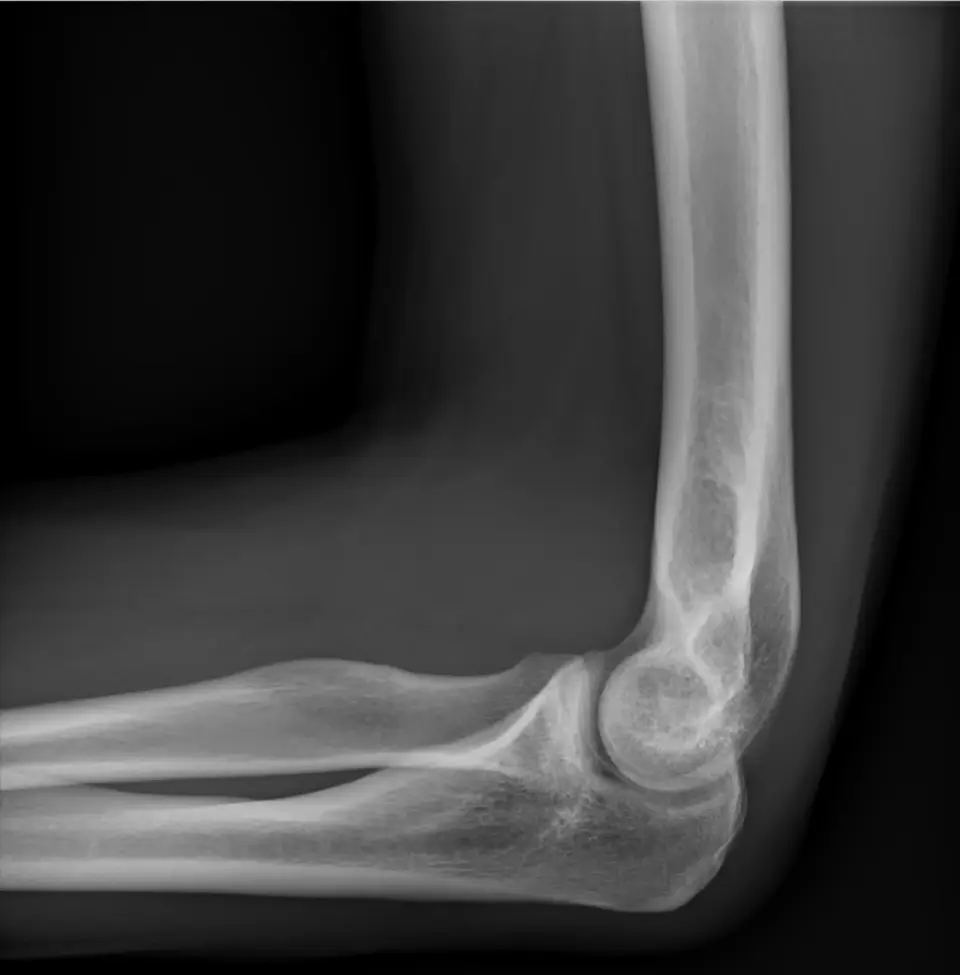
The efficacy and cost-effectiveness of arthroscopic release for post-traumatic elbow stiffness: a single centre prospective randomized trial
OrtopediaPor ScienceMed · · a partir do resumo dos autores
Resumo original em inglês
O que aconteceu
BACKGROUND: Post-traumatic elbow stiffness (PTES) severely limits elbow function, often necessitating surgical intervention after conservative measures fail. Although open arthrolysis (OA) is traditionally preferred, arthroscopic release (AR), being less invasive, could offer comparable or superior clinical outcomes with potentially lower complication rates. However, evidence from rigorous randomized trials directly comparing AR and OA for PTES remains scarce. This prospective randomized controlled trial aimed to evaluate and compare clinical outcomes, safety, and cost-effectiveness of arthroscopic release (AR) versus open arthrolysis (OA) in patients with PTES. METHOD: From November 2016 to December 2022, 192 patients diagnosed with PTES, unresponsive to non-operative treatment, were randomized equally into AR and OA groups. Surgical interventions followed standardized techniques, including routine ulnar nerve management. Postoperative rehabilitation protocols were identical for both groups. Primary outcomes assessed were elbow flexion-extension and forearm rotation range of motion (ROM) at one year post-surgery. Secondary outcomes included flexion strength, endurance, patient-reported outcome measures (PROMs), cost analysis, and adverse event incidence. Statistical analyses used linear mixed-effects models and incremental cost-effectiveness ratios (ICER). RESULTS: At 1-year follow-up, both AR and OA produced substantial improvements in elbow motion and patient function and exceeded thresholds for clinically important gains. The between-group difference favoured AR (p 0.05), though OA uniquely reported two cases of superficial infection and two cases of deep infection requiring reoperation (none in AR). CONCLUSION: In this trial of post-traumatic stiff elbow, both arthroscopic and open release led to large, clinically meaningful improvements in motion and function. The small statistical advantage for AR in ROM did not reach clinical significance, and both approaches substantially benefited patients. AR appears to be a favourable option (with cost-effectiveness comparable to OA) for appropriately selected patients. These findings support offering arthroscopic release as an effective alternative for PTES when technically feasible, while acknowledging that either method can achieve excellent outcomes. TRIAL REGISTRATION NUMBER: ChiCTR2500101723 (Chinese Clinical Trial Registry, https://www.chictr.org.cn/ ).
Resumo publicado sob licença CC BY. A tradução para o português ainda não chegou a este estudo.
O estudo original
The efficacy and cost-effectiveness of arthroscopic release for post-traumatic elbow stiffness: a single centre prospective randomized trial
Shengdi Lu, Yanmao Wang, Shiyang Yu, Lihua Huang, Ruixin Wang, Jian Ding
Descritores MeSH
- Elbow Joint
- Joint Diseases
- Arthroscopy
- Elbow Injuries
- Female
- Humans
- Male
- Middle Aged
- Prospective Studies
- Range of Motion, Articular
Veja também
Estudos relacionados
- Does Early Continuous Passive Motion Improves Effectiveness of Physical Therapy After Arthroscopic Release of Elbow Contracture: A Prospective Randomized Trial
- Surgical treatments of post-traumatic elbow stiffness: a systematic review and meta-analysis
- Surgical Techniques: Robotic versus conventional Laparoscopic cholecystectomy IN benign Gallbladder disease: a randomized controlled, open, parallel, non-inferiority, single-center trial (STaRLING trial)
- The efficacy and cost-effectiveness analysis of telerehabilitation for patients after arthroscopic ACL-reconstruction: a non-inferiority randomized controlled trial