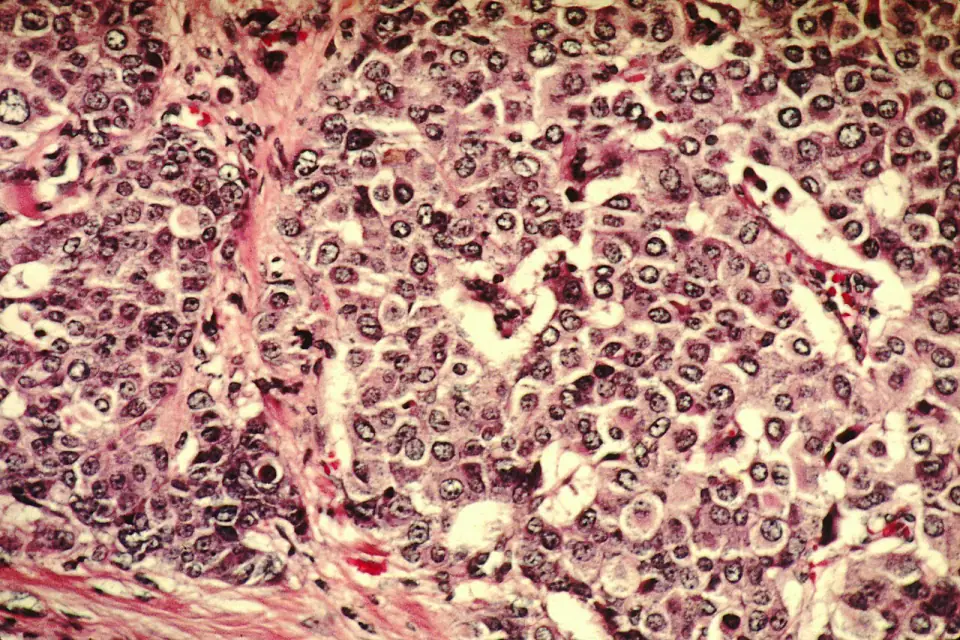
Spatial and temporal intratumoral heterogeneity in breast cancer: a systematic and conceptual review of single-cell and spatial omics studies
OncologiaPor ScienceMed · · a partir do resumo dos autores
Resumo original em inglês
O que aconteceu
Spatial and temporal intratumoral heterogeneity (ITH) remains a major challenge in the diagnosis, prognosis, and treatment of breast cancer. Recent advances in single-cell and spatial omics technologies have enabled unprecedented resolution of subclonal architectures, evolutionary trajectories, and microenvironmental interactions. This systematic and conceptual review aimed to synthesize and integrate current evidence on spatiotemporal ITH in human breast cancer, bridging empirical data with mechanistic interpretation through high-resolution profiling platforms
We conducted a systematic review following PRISMA 2020 guidelines, searching three databases (PubMed, Scopus, and Web of Science) and screening 1037 records published between January 2018 and May 2025. 19 original studies were included based on predefined eligibility criteria targeting single-cell RNA sequencing (scRNA-seq), spatial transcriptomics, or multi-omics approaches applied to human breast tumor samples. Data extraction focused on study design, technologies used, subclonal dynamics, spatial/temporal resolution, tumor–immune interactions, and risk of bias
O que encontraram
The included studies analyzed over 400,000 single cells from diverse breast cancer subtypes, with a predominance of triple-negative breast cancer. Subclonal plasticity was a recurrent feature, often characterized by EMT (epithelial-to-mesenchymal transition) signatures, cell-cycle heterogeneity, and immune evasion. Spatial analyses revealed discrete ecological niches shaped by immune exclusion and stromal patterning, while temporal assessments uncovered therapy-driven clonal selection, metabolic reprogramming, and enhancer remodeling. Interclonal and tumor–immune communication were consistently associated with poor prognosis or therapeutic resistance. Most studies were judged to have low or moderate risk of bias, with transparent reporting and accessible data pipelines
Por que isso importa
Single-cell and spatial omics studies provide critical insights into the evolutionary ecology of breast cancer. By conceptually integrating spatial, temporal, and microenvironmental dimensions, this review highlights convergent evolutionary programs underlying tumor aggressiveness and resistance. Spatiotemporal ITH is a key driver of disease progression, and its systematic characterization could inform biomarker development, personalized therapies, and future multi-modal diagnostics. Continued integration of spatial, temporal, and functional data is essential to move from descriptive maps to clinically actionable frameworks
Resumo publicado sob licença CC BY. A tradução para o português ainda não chegou a este estudo.
O estudo original
Spatial and temporal intratumoral heterogeneity in breast cancer: a systematic and conceptual review of single-cell and spatial omics studies
Imad Barjij, Oumaima Lamsyah, Sanae Kdadri, Sihame Lkhoyaali, Salma Najem, Sarah Naciri, Hanane Inrhaouen, Ibrahim Elghissassi, Saber Boutayeb, Hind Mrabti et al.
Descritores MeSH
- Single-Cell Analysis
- Breast Neoplasms
- Spatial Transcriptomics
- Female
- Humans
- Genetic Heterogeneity
- Single-Cell Gene Expression Analysis
- Tumor Microenvironment
- Multiomics
Veja também
Estudos relacionados
- Understanding heterogeneity in the pathogenesis and drug responses of ulcerative colitis through single-cell and spatial transcriptomics
- Multi-omics and high-spatial-resolution omics: deciphering complexity in neurological disorders
- Spatially Resolved Multi-Omics Single-Cell Analyses Inform Mechanisms of Immune Dysfunction in Pancreatic Cancer
- Meta-Analysis of Human Cancer Single-Cell RNA-Seq Datasets Using the IMMUcan Database