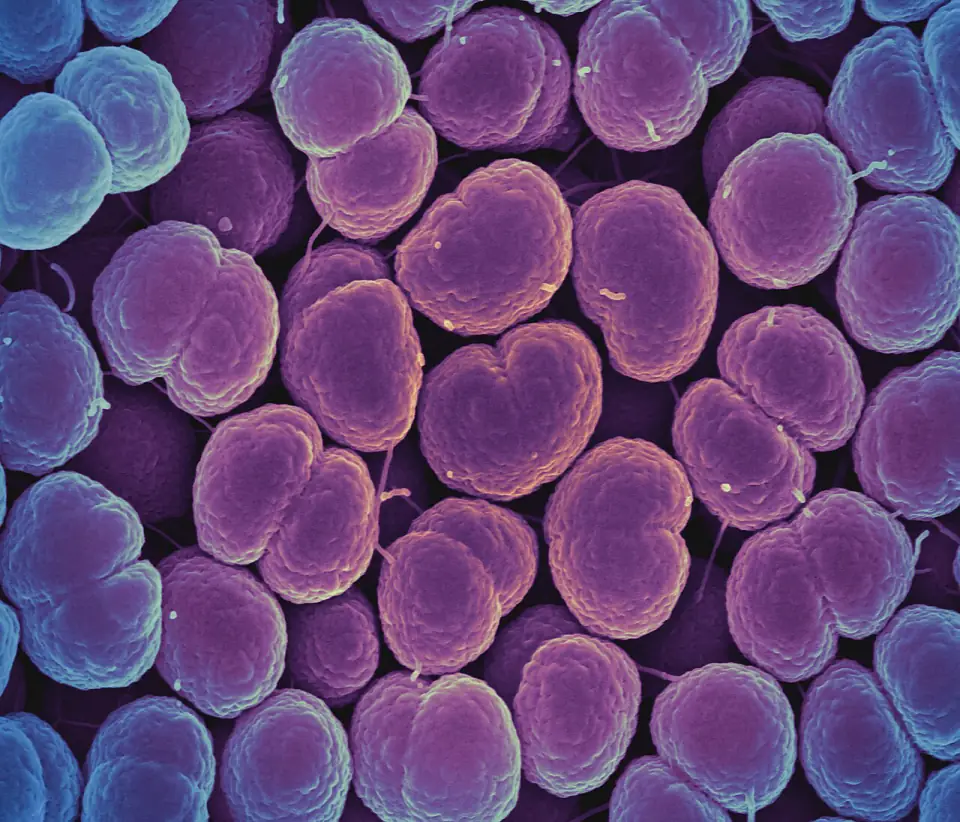
Resistência antimicrobiana em Neisseria gonorrhoeae Isolados de Homens com Infecção Uretral ou Urogenital: Revisão Sistemática e Meta-Análise
InfectologiaResumo original em inglês
O que aconteceu
Antimicrobial resistance in Neisseria gonorrheae threatens the effectiveness of empirical gonorrhoea treatment. Although global surveillance evidence is increasingly available, resistance data are not consistently reported separately for men with urethral or urogenital infection. This review evaluated antibiotic-specific resistance in N. gonorrhoeae isolates from this clinically defined population and examined the geographic and reporting limitations of the available evidence.
PubMed, Scopus, ScienceDirect, Google Scholar, and relevant WHO GASP/EGASP resources were searched from inception to [updated search date]. Eligible observational or surveillance studies reported categorical resistance classifications or extractable antibiotic-specific resistant counts and denominators for male urethral or urogenital isolates. Antibiotic-specific proportions were synthesized using random-effects meta-analysis where pooling was considered appropriate. Sparse-event outcomes were additionally evaluated using study-specific estimates and aggregate resistant/tested counts. Certainty of evidence was assessed using the GRADE framework adapted for prevalence outcomes.
O que encontraram
Six studies met the eligibility criteria, including the 2025 multinational EGASP study. Cefixime resistance was reported in 748 of 13,154 isolates, corresponding to an aggregate proportion of 5.69%; however, the random-effects estimate was unstable because three studies reported no resistant isolates and events were concentrated in two large datasets. Ceftriaxone resistance varied from 0% to 5.17%, with a pooled estimate of 0.32% (95% CI 0.05-2.15; I2 = 97.8%). Resistance was high but heterogeneous for ciprofloxacin (71.84%, 95% CI 7.53-98.77; I2 = 97.3%) and penicillin (62.47%, 95% CI 36.87-82.58; I2 = 98.1%). Spectinomycin resistance was 2.57% (95% CI 1.58-4.16; I2 = 0%), while azithromycin resistance was 6.38% (95% CI 4.38-9.21; I2 = 94.9%). Certainty of evidence was very low for all outcomes.
Por que isso importa
Evidence specifically reporting resistance in male urethral or urogenital N. gonorrhoeae isolates remains limited and geographically uneven. Contemporary EGASP data demonstrate that ceftriaxone resistance is not uniformly low across surveillance settings. The pooled estimates should be interpreted as exploratory summaries rather than current global prevalence values or an independent basis for treatment selection. Standardized reporting of sex, anatomical site, breakpoints, MIC distributions, and resistant/tested counts is needed to improve future surveillance synthesis.
Resumo publicado sob licença CC BY. A tradução para o português ainda não chegou a este estudo.
O estudo original
Antimicrobial Resistance in Neisseria gonorrhoeae Isolates from Men with Urethral or Urogenital Infection: A Systematic Review and Meta-Analysis
Daurenbek Sengirbayev, Marat Batyrbekov, Zhakhanger Tursunov, Ulugbek Medeubekov, Tilek Kassymov, Mustafa Rysuly, Indira Karibayeva, Zhansaya Sultanbayeva
Descritores MeSH
- Neisseria gonorrhoeae
- Gonorrhea
- Drug Resistance, Bacterial
- Third Generation Cephalosporins
- Microbial Sensitivity Tests
- Cefixime
- Male
- Anti-Bacterial Agents
- Humans