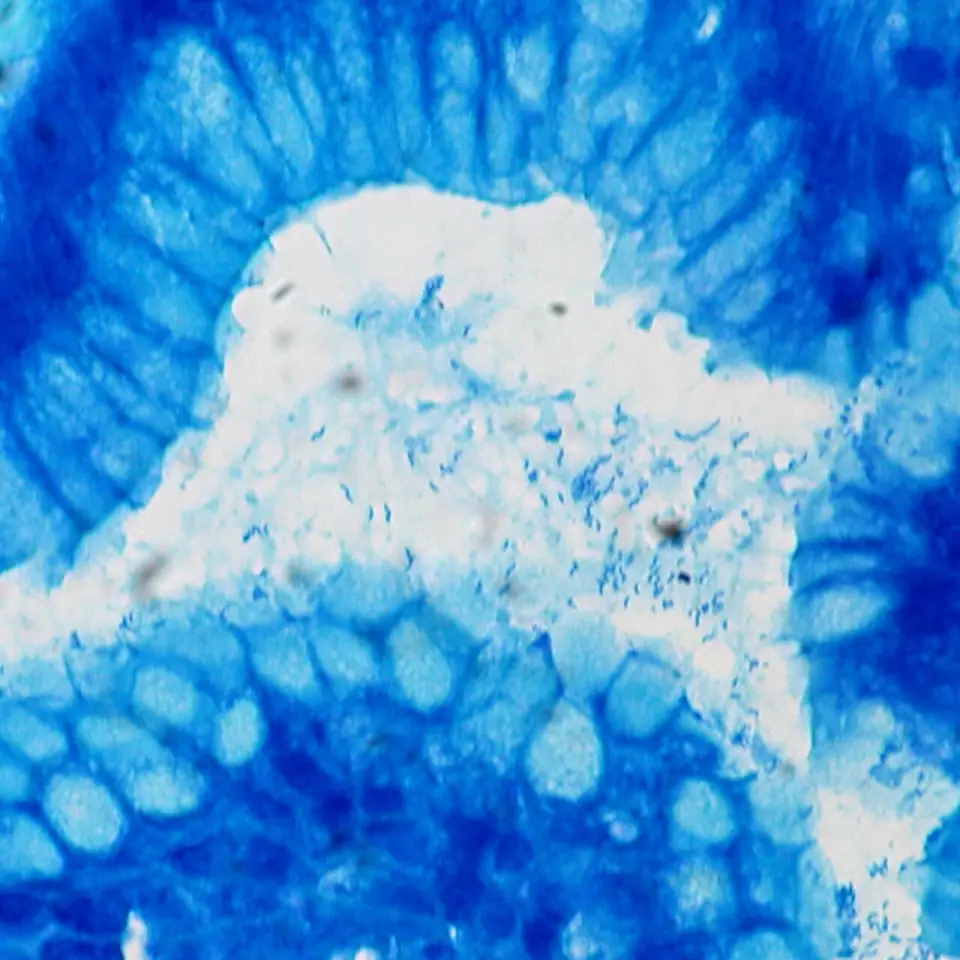
Probiotic containing Lactobacillus reuteri DSM 17648 as an adjunct treatment for Helicobacter pylori infection: A randomized, double-blind, placebo-controlled trial
GastroenterologiaPor ScienceMed · · a partir do resumo dos autores
Resumo original em inglês
O que aconteceu
Despite multiple therapy regimens, the decline in the Helicobacter pylori eradication rate poses a significant challenge to the medical community. Adding Lactobacillus reuteri probiotic as an adjunct treatment has shown some promising results. This study aims to investigate the efficacy of Lactobacillus reuteri DSM 17648 in H. pylori eradication and its effect in ameliorating gastrointestinal symptoms and adverse treatment effects.
This randomized, double-blinded, placebo-controlled trial involved treatment-naïve H. pylori-positive patients. Ninety patients received standard triple therapy for 2 weeks before receiving either a probiotic or placebo for 4 weeks. The posttreatment eradication rate was assessed via a 14 C urea breath test in Week 8. The Gastrointestinal Symptom Rating Scale (GSRS) questionnaire and an interview on treatment adverse effects were conducted during this study.
O que encontraram
The eradication rate was higher in the probiotic group than in the placebo group, with a 22.2% difference in the intention-to-treat analysis (91.1% vs. 68.9%; p = 0.007) and 24.3% difference in the per-protocol analysis (93.2% vs. 68.9%; p = 0.007). The probiotic group showed significant pre- to post-treatment reductions in indigestion, constipation, abdominal pain, and total GSRS scores. The probiotic group showed significantly greater reductions in GSRS scores than the placebo group: indigestion (4.34 ± 5.00 vs. 1.78 ± 5.64; p = 0.026), abdominal pain (2.64 ± 2.88 vs. 0.89 ± 3.11; p = 0.007), constipation (2.34 ± 3.91 vs. 0.64 ± 2.92; p = 0.023), and total score (12.41 ± 12.19 vs. 4.24 ± 13.72; p = 0.004). The probiotic group reported significantly fewer adverse headache (0% vs. 15.6%; p = 0.012) and abdominal pain (0% vs. 13.3%; p = 0.026) effects.
Por que isso importa
There was a significant increase in H. pylori eradication rate and attenuation of symptoms and adverse treatment effects when L. reuteri was given as an adjunct treatment.
Resumo publicado sob licença CC BY. A tradução para o português ainda não chegou a este estudo.
O estudo original
Probiotic containing Lactobacillus reuteri DSM 17648 as an adjunct treatment for Helicobacter pylori infection: A randomized, double-blind, placebo-controlled trial
Nur Izreena Ismail, Khairul Najmi Muhammad Nawawi, Deborah Chew Chia Hsin, Kok Wei Hao, Nik Ritza Kosai Nik Mahmood, Gary Lee Chong Chearn, Zhiqin Wong, Azmi Mohd Tamil, Hazel Joseph, Raja Affendi Raja Ali
Descritores MeSH
- Gastrointestinal Diseases
- Helicobacter pylori
- Helicobacter Infections
- Dyspepsia
- Probiotics
- Limosilactobacillus reuteri
- Abdominal Pain
- Constipation
- Drug Therapy, Combination
- Humans
Veja também
Estudos relacionados
- Randomized, double-blind, placebo-controlled clinical trial on the usefulness of probiotic Lactobacillus reuteri in bismuth-containing quadruple eradication therapy for infection with Helicobacter pylori
- Multistrain probiotics alleviate gastrointestinal symptoms during bismuth quadruple therapy for Helicobacter pylori infection
- Impact of supplementing Limosilactobacillus fermentum MN-LF23 on the eradication of Helicobacter pylori with 14-day standard quadruple therapy: a randomized, double-blind, placebo-controlled trial
- Eradication of Helicobacter pylori that contributes to hepatogenic ulcer is beneficial to the healing of hepatogenic ulcer