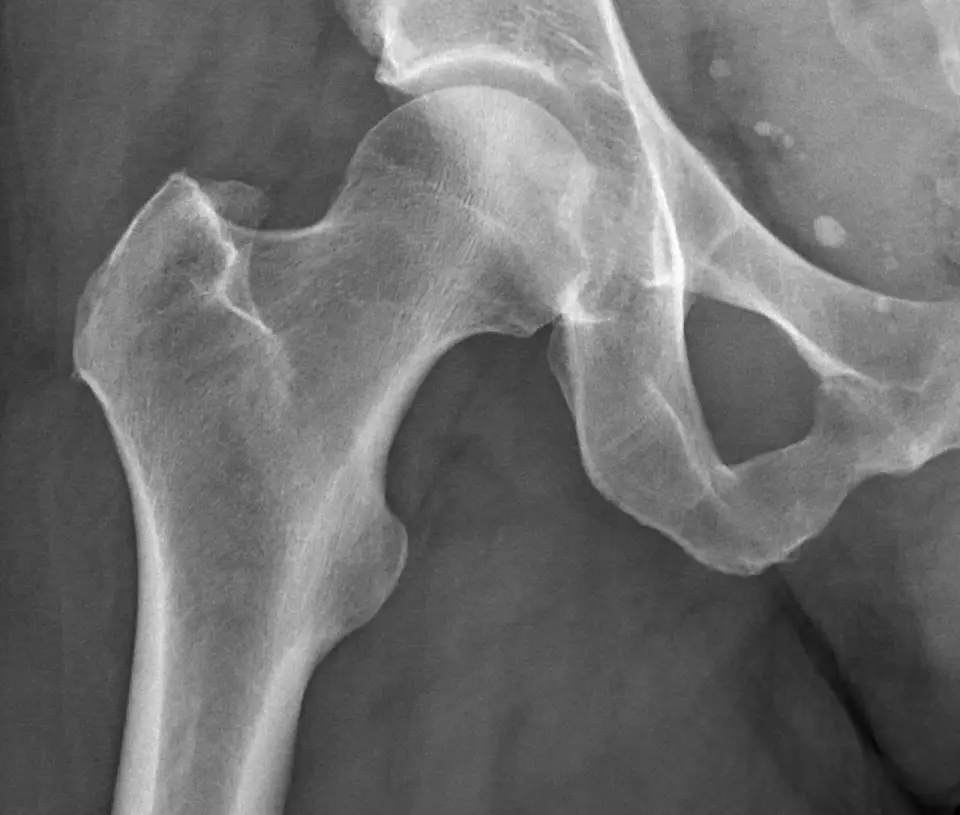
Postoperative hip bracing reduces kinesiophobia in patients undergoing hip arthroscopy: a randomized-controlled trial
OrtopediaPor ScienceMed · · a partir do resumo dos autores
Resumo original em inglês
O que aconteceu
Detailed postoperative rehabilitation protocols after hip arthroscopy for femoroacetabular impingement syndrome (FAIS) are still a matter of debate. Adjunctive hip bracing represents a promising tool to improve early patients' mobilization. To present, the effect of hip brace therapy on postoperative functional outcomes and specific patient individual psychologic factors remains controversially discussed. Consequently, we aimed to report postoperative outcomes focusing on hip function, pain and kinesiophobia between braced and unbraced patients.
A prospective, randomized-controlled trial was conducted, including patients undergoing hip arthroscopy for FAIS. After exclusion, a final study cohort of 36 patients in the intervention group (postoperative hip brace) and 36 patients in the control group (no hip brace) were compared for kinesiophobia (Tampa Scale of Kinesiophobia), pain (Visual analog scale) and joint function (International Hip Outcome Tool-12) within the first six postoperative months.
O que encontraram
Hip arthroscopy significantly improved all patient-reported outcomes in both groups. Intergroup analysis revealed significantly lower levels of kinesiophobia in braced patients at 6-months follow up (30.7 vs. 34.1, p = 0.04) while not negatively affecting pain and joint function. No intra- and postoperative complications occurred within both groups.
Por que isso importa
This study could demonstrate that bracing after hip arthroscopy can positively influence kinesiophobia, while the brace did not negatively impact postoperative pain and quality of life. Thus, hip bracing could be a viable assistive therapy in the postoperative rehabilitation phase after hip arthroscopy.
Resumo publicado sob licença CC BY. A tradução para o português ainda não chegou a este estudo.
O estudo original
Postoperative hip bracing reduces kinesiophobia in patients undergoing hip arthroscopy: a randomized-controlled trial
Maximilian Fischer, Lars Nonnenmacher, Christian Sobau, Alexander Zimmerer
Descritores MeSH
- Braces
- Arthroscopy
- Femoracetabular Impingement
- Hip Joint
- Humans
- Kinesiophobia
- Middle Aged
- Pain Measurement
- Phobic Disorders
- Postoperative Care
Veja também
Estudos relacionados
- Efeitos da Instrução de Vídeo Animado Combinado com Vídeo de Demonstração Prática no Exercício Funcional Pós-operatório Compliance and Rehabilitation Outcomes in Patents Undergoing Arthroscopic Shoulder Surgery
- A Randomized Controlled Trial of Postoperative Hip Bracing After Arthroscopic Osteoplasty and Labral Repair for Femoroacetabular Impingement Syndrome
- Hip arthroscopy complications regarding surgery and early postoperative care: retrospective study and review of literature
- Evaluating a 3-Month Physical Impairment and Functional Performance-Based Rehabilitation Program After Hip Arthroscopy for Femoroacetabular Impingement (FAI) Syndrome