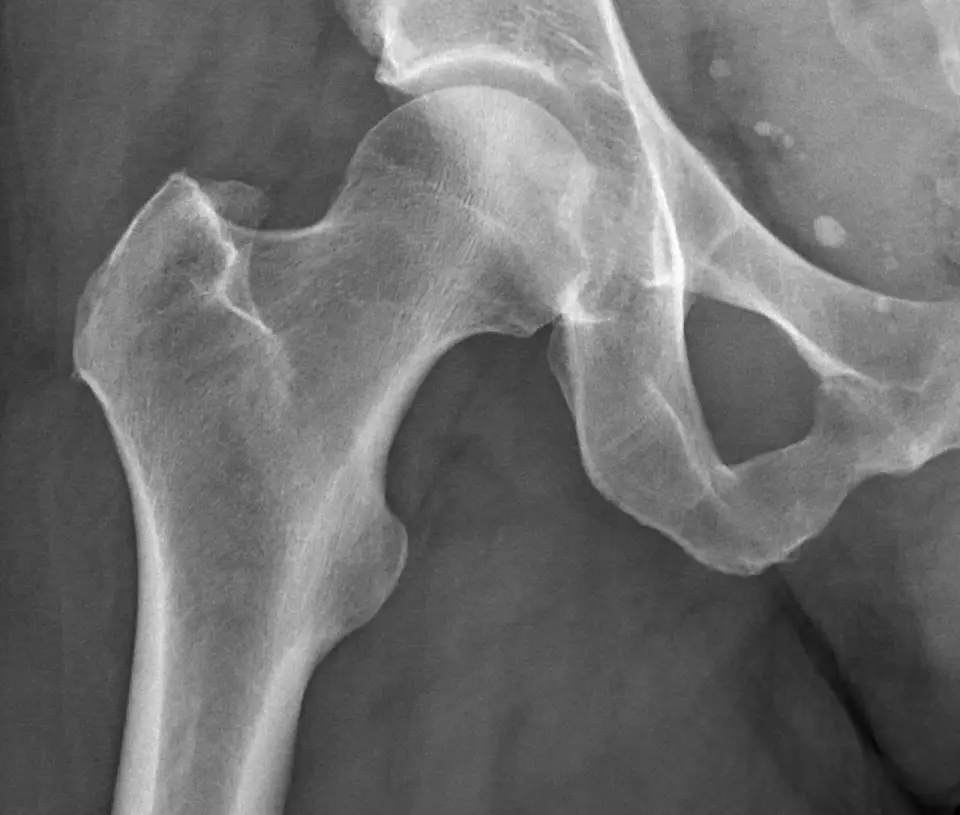
Multi-centre randomised controlled trial comparing arthroscopic hip surgery to physiotherapist-led care for femoroacetabular impingement (FAI) syndrome on hip cartilage metabolism: the Australian FASHIoN trial
OrtopediaPor ScienceMed · · a partir do resumo dos autores
Resumo original em inglês
O que aconteceu
Arthroscopic surgery for femoroacetabular impingement syndrome (FAI) is known to lead to self-reported symptom improvement. In the context of surgical interventions with known contextual effects and no true sham comparator trials, it is important to ascertain outcomes that are less susceptible to placebo effects. The primary aim of this trial was to determine if study participants with FAI who have hip arthroscopy demonstrate greater improvements in delayed gadolinium-enhanced magnetic resonance imaging (MRI) of cartilage (dGEMRIC) index between baseline and 12 months, compared to participants who undergo physiotherapist-led management.
Multi-centre, pragmatic, two-arm superiority randomised controlled trial comparing physiotherapist-led management to hip arthroscopy for FAI. FAI participants were recruited from participating orthopaedic surgeons clinics, and randomly allocated to receive either physiotherapist-led conservative care or surgery. The surgical intervention was arthroscopic FAI surgery. The physiotherapist-led conservative management was an individualised physiotherapy program, named Personalised Hip Therapy (PHT). The primary outcome measure was change in dGEMRIC score between baseline and 12 months. Secondary outcomes included a range of patient-reported outcomes and structural measures relevant to FAI pathoanatomy and hip osteoarthritis development. Interventions were compared by intention-to-treat analysis.
Australia New Zealand Clinical Trials Registry reference: ACTRN12615001177549 . Trial registered 2/11/2015.
O que encontraram
Ninety-nine participants were recruited, of mean age 33 years and 58% male. Primary outcome data were available for 53 participants (27 in surgical group, 26 in PHT). The adjusted group difference in change at 12 months in dGEMRIC was -59 ms (95%CI - 137.9 to - 19.6) (p = 0.14) favouring PHT. Hip-related quality of life (iHOT-33) showed improvements in both groups with the adjusted between-group difference at 12 months showing a statistically and clinically important improvement in arthroscopy of 14 units (95% CI 5.6 to 23.9) (p = 0.003).
Por que isso importa
The primary outcome of dGEMRIC showed no statistically significant difference between PHT and arthroscopic hip surgery at 12 months of follow-up. Patients treated with surgery reported greater benefits in symptoms at 12 months compared to PHT, but these benefits are not explained by better hip cartilage metabolism.
Resumo publicado sob licença CC BY. A tradução para o português ainda não chegou a este estudo.
O estudo original
Multi-centre randomised controlled trial comparing arthroscopic hip surgery to physiotherapist-led care for femoroacetabular impingement (FAI) syndrome on hip cartilage metabolism: the Australian FASHIoN trial
David J Hunter, Jillian Eyles, Nicholas J Murphy, Libby Spiers, Alexander Burns, Emily Davidson, Edward Dickenson, Camdon Fary, Nadine E Foster, Jurgen Fripp et al.
Descritores MeSH
- Femoracetabular Impingement
- Physical Therapists
- Australia
- Female
- Hip Joint
- Adult
- Male
- Quality of Life
- Treatment Outcome
- Humans
Veja também
Estudos relacionados
- Comparison of Walking Biomechanics After Physical Therapist-Led Care or Hip Arthroscopy for Femoroacetabular Impingement Syndrome: A Secondary Analysis From a Randomized Controlled Trial
- Hip Arthroscopy in Patients With Acetabular Dysplasia: A Systematic Review of Clinical Outcomes at Long-term Follow-up
- Outcomes After Hip Arthroscopy Show No Differences Between Sexes: A Systematic Review
- The Influence of Psychosocial Factors on Hip Surgical Disorders and Outcomes After Hip Arthroscopy: A Systematic Review