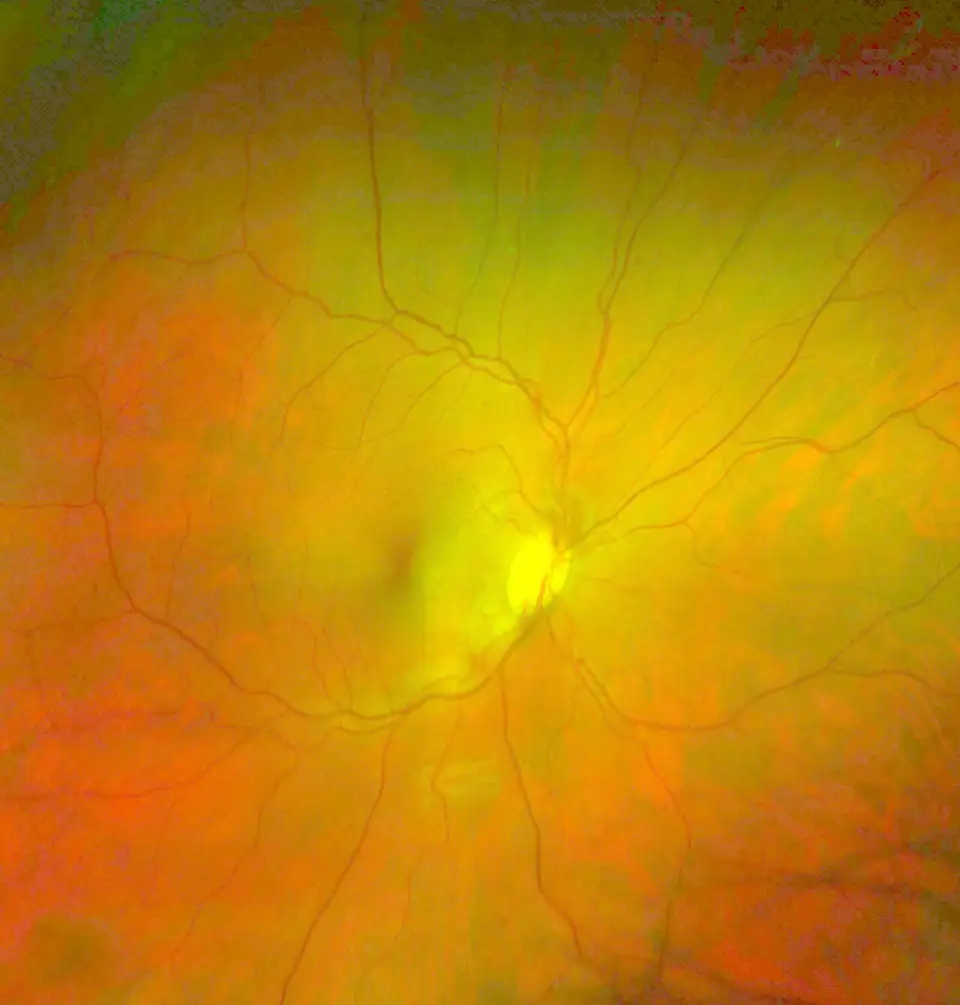
Macular Atrophy in Neovascular Age-related Macular Degeneration: A Systematic Review and Meta-analysis
OftalmologiaPor ScienceMed · · a partir do resumo dos autores
Resumo original em inglês
O que aconteceu
Macular atrophy incidence in neovascular age-related macular degeneration (AMD) patients undergoing anti-VEGF treatment.
We conducted a systematic review and meta-analysis following PRISMA guidelines (PROSPERO, CRD42024474924). A comprehensive literature search of MEDLINE, EMBASE, and Web of Science was performed up to November 1, 2023. Randomized and nonrandomized studies of treatment-naive neovascular AMD patients reporting macular atrophy incidence at 24 ± 3 months after anti-VEGF therapy were eligible. Two independent reviewers conducted screening, data extraction, and quality assessment. For randomized controlled trials, the Cochrane Risk of Bias 2 tool was employed, whereas nonrandomized studies were evaluated using the Risk Of Bias In Nonrandomized Studies of Interventions tool. Random-effects meta-analysis models accounted for study variability. Heterogeneity was assessed with the I2 statistic, and publication bias by funnel plots and Egger test. The primary outcome was the incidence of new macular atrophy at 24 months post-treatment, with secondary outcomes at 12 months. Atrophy was diagnosed using color fundus photograph, fluorescein angiography, fundus autofluorescence, OCT, or multimodal imaging.
Proprietary or commercial disclosure may be found in the Footnotes and Disclosures at the end of this article.
O que encontraram
Twenty-three studies met the inclusion criteria for qualitative analysis, with 11 included in the meta-analysis (N = 3013 eyes). The pooled 24-month incidence of macular atrophy was 29% (95% confidence interval [CI]: 20%-38%, I2 = 93%). Subgroup analysis revealed incidence rates of 26% (95% CI: 15%-37%, I2 = 88%) for 814 eyes with type 1/2 macular neovascularization (MNV), 49% (95% CI: 18%-80%, I2 = 92%) for type 3 MNV (N = 230 eyes), and 29% (95% CI: 18%-40%, I2 = 96%) for all MNV types (N = 2131 eyes). The pooled 12-month incidence among 2214 eyes was 11% (95% CI: 4%-18%, I2 = 93%). The certainty of evidence, as assessed by Grading of Recommendations, Assessment, Development and Evaluation, was low.
Por que isso importa
Macular atrophy is a significant event that may occur in eyes with neovascular AMD treated with anti-VEGF therapy.
Although this meta-analysis has limitations, including a moderate risk of bias in nonrandomized studies, inconsistencies in the results indicated by high heterogeneity, and imprecision due to the different imaging modalities used to diagnose macular atrophy, our results suggest that macular atrophy could be a common complication in patients with neovascular AMD receiving anti-VEGF therapy.
Resumo publicado sob licença CC BY. A tradução para o português ainda não chegou a este estudo.
O estudo original
Macular Atrophy in Neovascular Age-related Macular Degeneration: A Systematic Review and Meta-analysis
Alessandro Berni, Andrea Coletto, Jianqing Li, Mengxi Shen, Francesco Bandello, Michele Reibaldi, Enrico Borrelli
Descritores MeSH
- Wet Macular Degeneration
- Macula Lutea
- Fundus Oculi
- Humans
- Visual Acuity
- Incidence
- Angiogenesis Inhibitors
- Tomography, Optical Coherence
- Vascular Endothelial Growth Factor A
- Atrophy
Veja também
Estudos relacionados
- Intravitreal aflibercept 8 mg in patients from Japan with neovascular age-related macular degeneration: 48-week subgroup analysis of the PULSAR trial
- Correlação líquido/função utilizando quantificação baseada em IA versus espessura central de subcampo em pacientes sem tratamento prévio e pré-tratados com DMA neovascular em ambiente real
- Randomized Trial of Biosimilar ABP 938 Compared with Reference Aflibercept in Adults with Neovascular Age-Related Macular Degeneration
- A post-hoc analysis of intravitreal aflibercept-treated nAMD patients from ARIES & ALTAIR: predicting treatment intervals and frequency for aflibercept treat-and-extend therapy regimen using machine learning