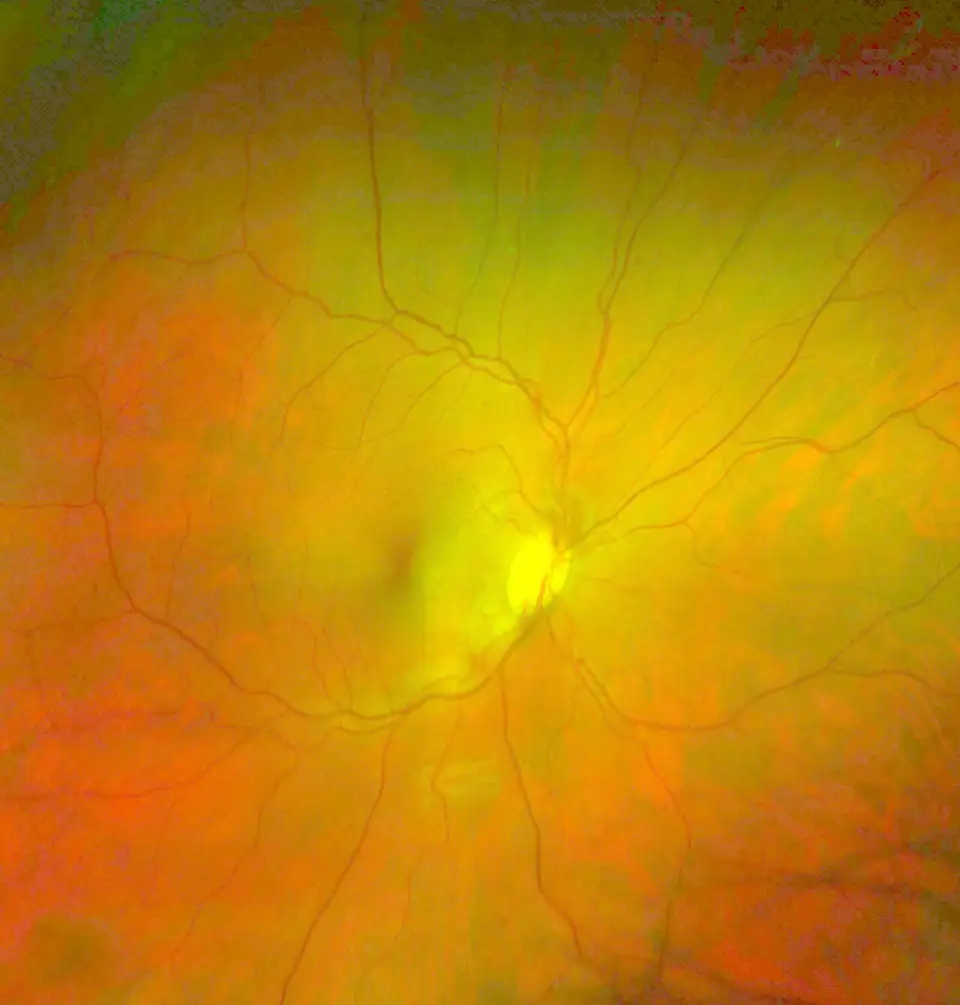
Laser in Glaucoma and Ocular Hypertension (LiGHT) Trial: Six-Year Results of Primary Selective Laser Trabeculoplasty versus Eye Drops for the Treatment of Glaucoma and Ocular Hypertension
OftalmologiaPor ScienceMed · · a partir do resumo dos autores
Resumo original em inglês
O que aconteceu
The Laser in Glaucoma and Ocular Hypertension (LiGHT) Trial has shown selective laser trabeculoplasty (SLT) to be clinically and cost-effective as a primary treatment of open-angle glaucoma (OAG) and ocular hypertension (OHT) at 3 years. This article reports health-related quality of life (HRQoL) and clinical effectiveness of initial treatment with SLT compared with intraocular pressure (IOP)-lowering eye drops after 6 years of treatment.
Prospective, multicenter randomized controlled trial.
Treatment-naive eyes with OAG or OHT initially treated with SLT or IOP-lowering drops.
Patients were allocated randomly to initial SLT or eye drops. After the initial 3 years of the trial, patients in the SLT arm were permitted a third SLT if necessary; patients in the drops arm were allowed SLT as a treatment switch or escalation. This study is registered at controlled-trials.com (identifier, ISRCTN32038223).
O que encontraram
The primary outcome was HRQoL at 6 years; secondary outcomes were clinical effectiveness and adverse events.
Of the 692 patients completing 3 years in the LiGHT Trial, 633 patients (91.5%) entered the extension, and 524 patients completed 6 years in the trial (82.8% of those entering the extension phase). At 6 years, no significant differences were found for the EuroQol EQ-5D 5 Levels, Glaucoma Utility Index, and Glaucoma Quality of Life-15 (P > 0.05 for all). The SLT arm showed better Glaucoma Symptom Scale scores than the drops arm (83.6 ± 18.1 vs. 81.3 ± 17.3, respectively). Of eyes in the SLT arm, 69.8% remained at or less than the target IOP without the need for medical or surgical treatment. More eyes in the drops arm exhibited disease progression (26.8% vs. 19.6%, respectively; P = 0.006). Trabeculectomy was required in 32 eyes in the drops arm compared with 13 eyes in the SLT arm (P < 0.001); more cataract surgeries occurred in the drops arm (95 compared with 57 eyes; P = 0.03). No serious laser-related adverse events occurred.
Por que isso importa
Selective laser trabeculoplasty is a safe treatment for OAG and OHT, providing better long-term disease control than initial drop therapy, with reduced need for incisional glaucoma and cataract surgery over 6 years.
Resumo publicado sob licença CC BY. A tradução para o português ainda não chegou a este estudo.
O estudo original
Laser in Glaucoma and Ocular Hypertension (LiGHT) Trial: Six-Year Results of Primary Selective Laser Trabeculoplasty versus Eye Drops for the Treatment of Glaucoma and Ocular Hypertension
Gus Gazzard, Evgenia Konstantakopoulou, David Garway-Heath, Mariam Adeleke, Victoria Vickerstaff, Gareth Ambler, Rachael Hunter, Catey Bunce, Neil Nathwani, Keith Barton et al.
Descritores MeSH
- Laser Therapy
- Glaucoma
- Glaucoma, Open-Angle
- Ocular Hypertension
- Trabeculectomy
- Cataract
- Treatment Outcome
- Ophthalmic Solutions
- Prospective Studies
- Quality of Life
Veja também
Estudos relacionados
- 24-Hour efficacy of single primary selective laser trabeculoplasty versus latanoprost eye drops for Naïve primary open-angle glaucoma and ocular hypertension patients
- Selective laser trabeculoplasty is safe and effective in patients previously treated with prostaglandin analogs: An evidence-based review
- Outcomes of Phacoemulsification With or Without Kahook Dual Blade Goniotomy for Glaucoma Patients With Cataract
- Trabeculoplastia a laser selectiva Pascal (PSLT) no tratamento da hipertensão ocular e glaucoma de ângulo aberto em comparação com colírios travoprost: Ensaio clínico de não inferioridade