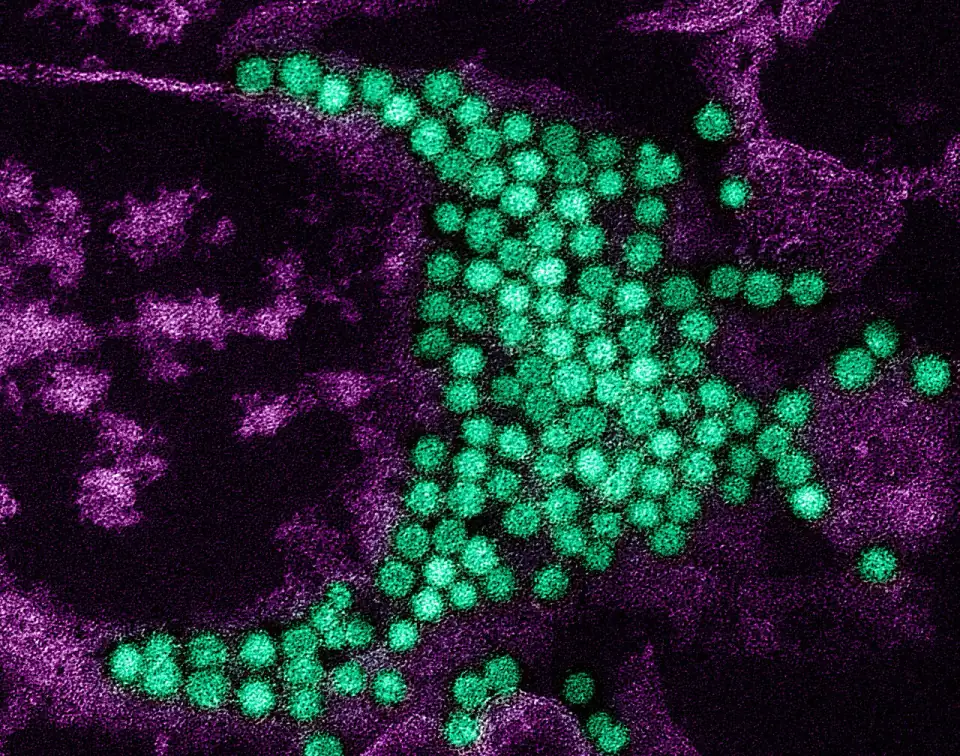
Eficácia e Mecanismos dos Alcalóides Contra o Enterovírus A71: Revisão Sistemática e Meta-Análise de Evidências Pré-clínicas Integradas com Farmacologia de Rede e Acoplamento Molecular
InfectologiaPor ScienceMed · · · a partir do resumo dos autores
Resumo original em inglês
O que aconteceu
Enterovirus A71 (EV-A71) is a major causative agent of hand, foot, and mouth disease, yet no specific antiviral therapy has been approved. This study systematically evaluated the efficacy and mechanisms of alkaloids against EV-A71 infection by integrating meta-analysis, network pharmacology, and molecular docking. Nine animal studies were included. Meta-analysis suggested that alkaloid intervention significantly improved survival (OR = 30.62, 95% CI: 10.44-89.82), reduced clinical severity, attenuated body weight loss, and decreased viral loads in infected tissues. Subgroup analyses preliminarily suggested that quinolizidine alkaloids and high-dose regimens (>5 mg/kg) may be associated with preclinical intervention effects. Network pharmacology predicted 155 shared targets between seven active alkaloids and EV-A71-related genes, with MAPK1, MAPK3, JUN, AURKB, and MAPK8 recognized as core targets through computational screening. Functional enrichment analysis suggested significant involvement of the MAPK, TNF, and IL-17 signaling pathways. Molecular docking provided computational support for stable binding affinities between active alkaloids and core targets (-6.7 to -9.3 kcal/mol). Collectively, these findings suggest that alkaloids exert anti-EV-A71 effects through both direct antiviral activity and host-directed regulatory mechanisms, supporting their potential as candidates for the development of novel anti-EV-A71 therapeutics.
Resumo publicado sob licença CC BY. A tradução para o português ainda não chegou a este estudo.
O estudo original
Efficacy and Mechanisms of Alkaloids Against Enterovirus A71: A Systematic Review and Meta-Analysis of Preclinical Evidence Integrated with Network Pharmacology and Molecular Docking
Wenzhan Xie, Linxi Lv, Tian Wang, Jialong Wei, Yanshan Gui, Wei Gu, Hui Feng
Descritores MeSH
- Alkaloids
- Antiviral Agents
- Enterovirus A, Human
- Enterovirus Infections
- Network Pharmacology
- Molecular Docking Simulation
- Animals
- Humans
- Signal Transduction
Veja também
Estudos relacionados
- Eficácia e mecanismos potenciais de alcaloides em modelos animais para fibrose pulmonar: um estudo que integra revisão sistemática pré-clínica e metanálise, farmacologia de rede e docking molecular
- Salvia miltiorrhiza for Viral Myocarditis: Multi-Computational Pharmacological Exploration and Meta-Analytic Efficacy Validation
- Therapeutic Effects of Alkaloids on Influenza: A Systematic Review and Meta-Analysis of Preclinical Studies
- Exploring the mechanism of Danggui Sini Decoction in the treatment of myocardial infarction: A systematic review, network pharmacology, and molecular docking