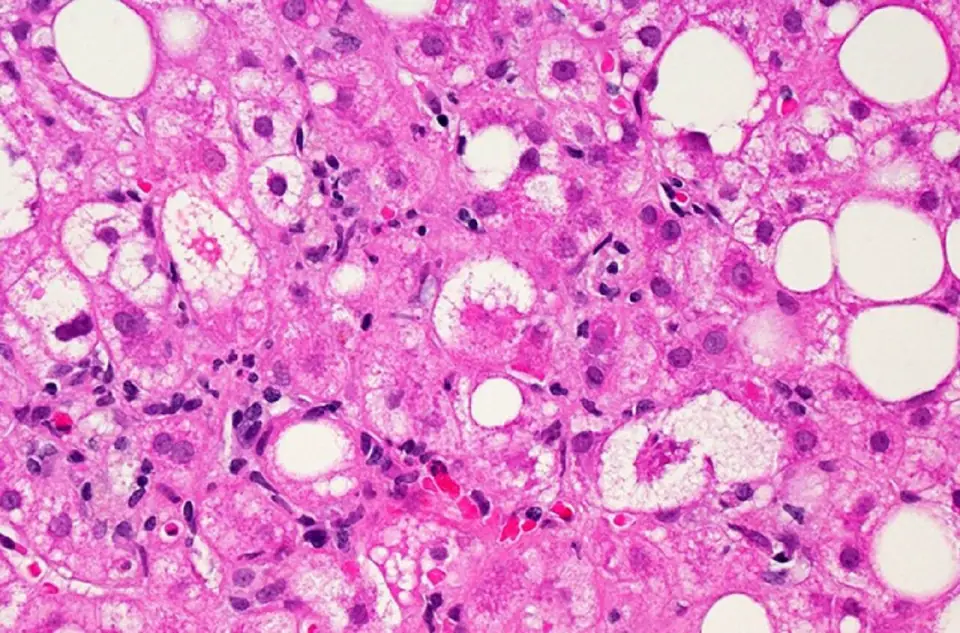
Effects of pemafibrate (a selective PPAR-α agonist) versus weight loss through an intensive lifestyle modification on liver enzymes, serum soluble dipeptidyl peptidase-4, and hepatic steatosis and fibrosis evaluated by FibroScan transient elastography in people with type 2 diabetes and MASLD
GastroenterologiaPor ScienceMed · · a partir do resumo dos autores
Resumo original em inglês
O que aconteceu
The present study aimed to investigate the effects of pemafibrate (a selective proliferator-activated receptor-α agonist) vs. weight loss through intensive lifestyle modification on hepatic steatosis and fibrosis evaluated by FibroScan and on serum levels of soluble Dipeptidyl Peptidase-4 (sDDP-4)/CD26, a hepatokine, in people with type 2 diabetes and Metabolic dysfunction-Associated Steatotic Liver Disease (MASLD).
In a randomized, active-controlled, open-label trial, 60 patients with type 2 diabetes and MASLD were randomized to receive 24 weeks' treatment with pemafibrate (0.2 mg/day; n=24) or an Intensive Lifestyle Intervention (ILI group; n = 27). FibroScan transient elastography was used to assess hepatic steatosis and fibrosis by Controlled Attenuation Parameter (CAP) and Liver Stiffness Measurement (LSM), respectively. Serum levels of sDPP-4/CD26 were measured with a commercial ELISA kit.
O que encontraram
Body weight decreased significantly in the ILI group but not in the pemafibrate group. At week 24, CAP showed a significant decrease in the ILI group but no significant change in the pemafibrate group. LSM was unchanged in both groups. Serum Alanine Aminotransferase (ALT), γ-glutamyl transpeptidase, and sDPP-4/CD26 levels decreased significantly in both groups. Changes in ALT during treatment with pemafibrate were positively correlated with changes in serum sDPP-4 and the FAST score.
Por que isso importa
In people with type 2 diabetes and MASLD, although weight loss through an ILI was better than pemafibrate in terms of the main indicators that assess improvements in the pathogenesis of MASLD, such as CAP, pemafibrate is as effective as moderate weight loss for decreasing liver enzymes or serum sDPP-4/CD26.
Resumo publicado sob licença CC BY. A tradução para o português ainda não chegou a este estudo.
O estudo original
Effects of pemafibrate (a selective PPAR-α agonist) versus weight loss through an intensive lifestyle modification on liver enzymes, serum soluble dipeptidyl peptidase-4, and hepatic steatosis and fibrosis evaluated by FibroScan transient elastography in people with type 2 diabetes and MASLD
Kanako Kato, Teruo Jojima, Dai Tanuma, Kanako Suda, Shintaro Sakurai, Toshie Iijima, Takuya Tomaru, Isao Usui, Yoshimasa Aso
Descritores MeSH
- Benzoxazoles
- Butyrates
- Diabetes Mellitus, Type 2
- Weight Loss
- Fatty Liver
- Dipeptidyl Peptidase 4
- PPAR alpha
- Liver Cirrhosis
- Middle Aged
- Time Factors
Veja também
Estudos relacionados
- Um estudo controlado e randomizado com aspirina diária para reduzir a rigidez hepática e marcadores de fibrose não invasivos na doença hepática esteatótica associada à disfunção metabólica (DMMD)
- Eficácia da dapagliflozina na esteatose hepática e fibrose em pacientes com diabetes mellitus tipo 2 e doença hepática esteatótica associada à disfunção metabólica: uma análise de braço único pré-especificada de um ensaio controlado randomizado
- Comparative effectiveness of pemafibrate versus bezafibrate on hepatic and vascular endothelial function in patients with coronary artery disease and metabolic dysfunction-associated steatotic liver disease
- The impact of semaglutide on liver fat assessed by serial cardiac CT scans in patients with type 2 diabetes: Results from STOP trial