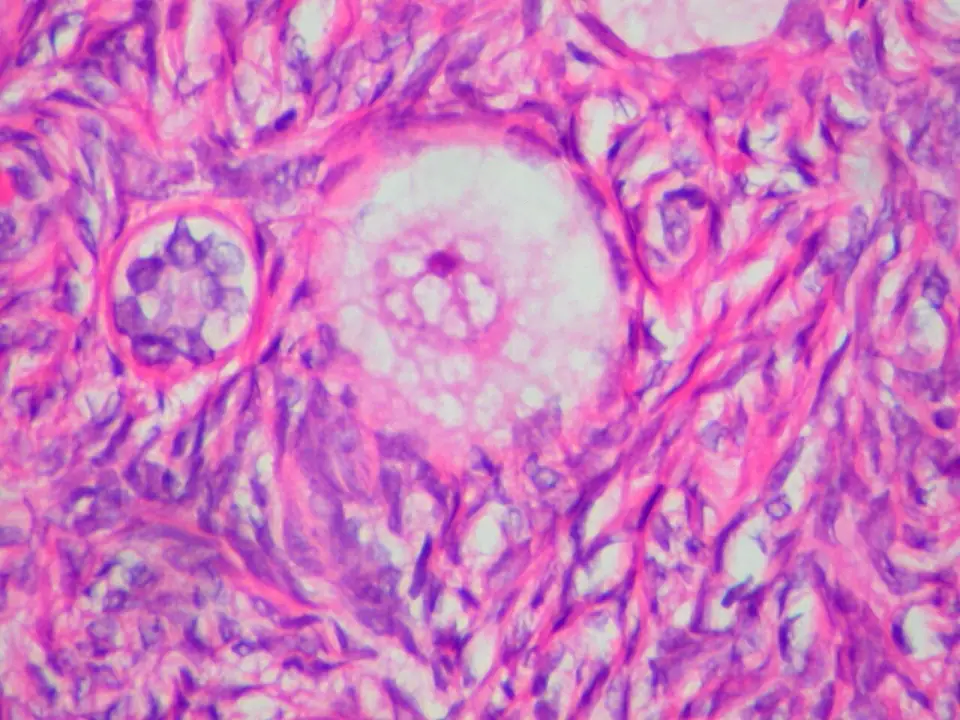
Effect of pre-treatment with oral short-acting contraceptives on assisted reproductive technology outcomes in patients with polycystic ovary syndrome: a meta-analysis
Ginecologia e ObstetríciaPor ScienceMed · · a partir do resumo dos autores
Resumo original em inglês
O que aconteceu
This study aims to investigate the effects of pre-treatment with Combined Oral Contraceptives (COC) on the prognosis of individuals with polycystic ovary syndrome (PCOS) who undergo assisted reproductive technology (ART).
Three databases (PubMed, Embase, and Cochrane Library) were searched from their establishment until February 23, 2024. Literature screening was performed based on predefined inclusion and exclusion criteria. Meta-analysis was executed using Stata 14.0 software, with outcomes expressed as mean differences (MD) and odds ratios (ORs), with 95% confidence intervals (CIs).
https://www.crd.york.ac.uk/prospero, identifier CRD42024528652.
O que encontraram
Our comprehensive analysis comprised of 11 studies, encompassing a total of 4413 patients diagnosed with PCOS. Meta-analysis results revealed that, compared to no pre-treatment, the use of COC pre-treatment did not significantly improve clinical pregnancy rates (OR: 0.96, 95% CI: 0.85 to 1.09), cumulative pregnancy rates (OR: 1.13, 95% CI: 0.92 to 1.39), or implantation rates (OR: 1.16, 95% CI: 0.99 to 1.36). However, the use of COC pre-treatment was found to be linked to a higher rate of miscarriage (OR: 1.29, 95% CI: 1.01 to 1.65). Additionally, it did not have a significant impact on the rate of live births (OR: 0.81, 95% CI: 0.68 to 0.97), cumulative live births (OR: 0.90, 95% CI: 0.78 to 1.04), or the occurrence of OHSS (OR: 0.83, 95% CI: 0.54 to 1.28). Gonadotropin dosage required for ovarian stimulation also showed no significant difference (MD: -15.32, 95% CI: -79.79 to 49.15). At the same time, we analyzed different ovulation induction regimens and found that there was no statistically significant miscarriage rate between the GnRH agonist (standard long regimen) after COC pre-treatment and the control group (OR: 1.12, 95% CI: 0.79 to 1.59), while there was no significant difference between the live birth rate with GnRH agonist (standard long regimen) after contraceptive pre-treatment and the control group (OR: 0.85, 95% CI: 0.64 to 1.14).
Por que isso importa
Administering COC pre-treatment for patients with PCOS undergoing ART does not provide substantial advantages in terms of clinical pregnancy, cumulative pregnancy, live birth rates, or the reduction of OHSS incidence. However, it is associated with an increased risk of miscarriage.
Resumo publicado sob licença CC BY. A tradução para o português ainda não chegou a este estudo.
O estudo original
Effect of pre-treatment with oral short-acting contraceptives on assisted reproductive technology outcomes in patients with polycystic ovary syndrome: a meta-analysis
Yufei Liang, Qiquan Zhang, Zhaoxia Lou
Descritores MeSH
- Contraceptives, Oral, Combined
- Infertility, Female
- Polycystic Ovary Syndrome
- Reproductive Techniques, Assisted
- Ovulation Induction
- Pregnancy Rate
- Female
- Humans
- Pregnancy
Veja também
Estudos relacionados
- Inositol para mulheres inférteis com síndrome do ovário policístico
- Maturação in vitro para infertilidade na síndrome metabólica do ovário poliendócrino: uma revisão sistemática dos protocolos de tratamento e resultados
- Alterações nos níveis de fatores inflamatórios no líquido folicular de pacientes com SOP e seu impacto nos desfechos reprodutivos assistidos: Revisão sistemática e meta-análise
- Stair-step versus traditional clomiphene citrate protocols in polycystic ovary syndrome: a systematic review and meta-analysis