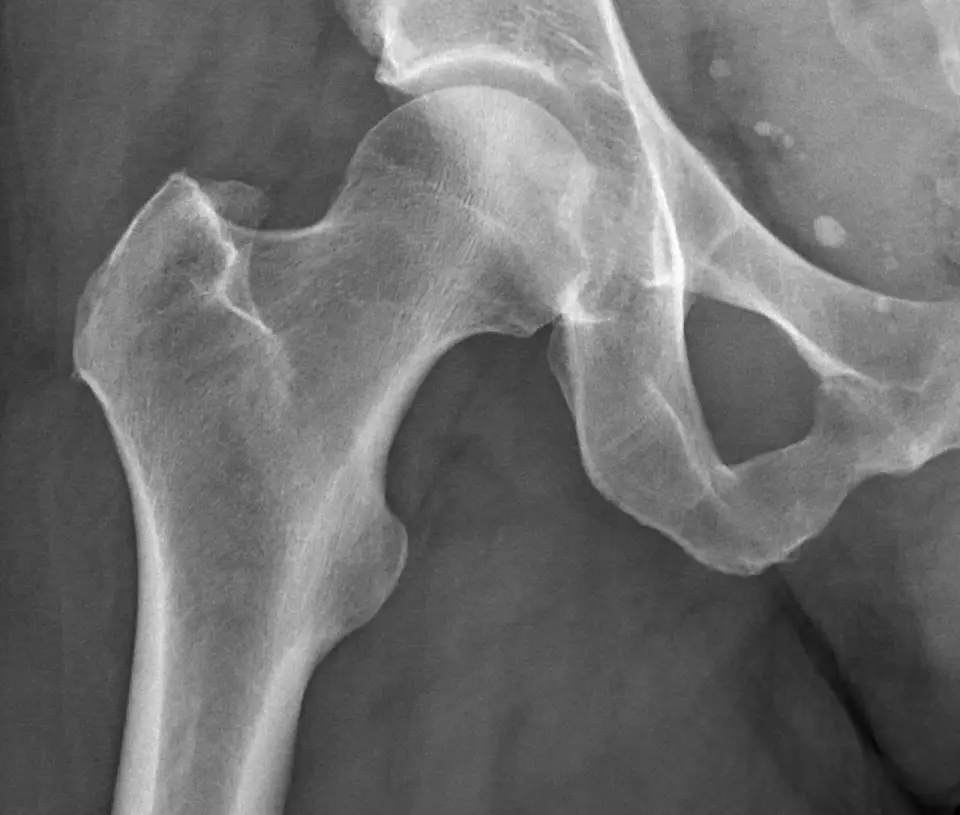
Efeitos do treinamento de resistência aquático e terrestre na saúde óssea da anca em mulheres idosas com excesso de peso: Ensaio controlado randomizado de 32 semanas
EndocrinologiaPor ScienceMed · · a partir do resumo dos autores
Resumo original em inglês
O que aconteceu
Exercise is recommended to preserve bone health during aging, although some older adults may experience difficulties participating in conventional land-based programs. Aquatic resistance training may represent a safe alternative, but its effects on bone health remain unclear. This study compared the effects of aquatic and land-based elastic resistance training on bone health in older women.
This secondary analysis included three arms of a six-arm randomized controlled trial. Both training groups performed supervised resistance exercise twice weekly for 32 weeks. Bone mineral content (BMC), bone mineral density (BMD), and T-score at the hip and lumbar spine were assessed using dual-energy X-ray absorptiometry. A two-way repeated-measures ANOVA was applied.
ClinicalTrials.gov, Identifier: ***blinded for peer review*** (retrospectively registered).
O que encontraram
Ninety-eight volunteers (67.5 ± 5.9 years; body mass index: 27.9 ± 5.6 kg/m2; body fat: 42.6 ± 4.2%) were randomly assigned to a land-based elastic-tube resistance training group (LG; n = 32), an aquatic resistance training group (WG; n = 33), or a control group (CG; n = 33). Significant time × group interactions were observed for Ward's triangle BMD and T-score, and total hip BMC. Post hoc comparisons showed greater improvements (p < 0.05) in Ward's triangle BMD (ES = 0.445) and T-score (ES = 0.412) in the WG compared with both LG and CG. No significant time × group interactions were observed for the remaining DXA-derived outcomes.
Por que isso importa
A 32-week aquatic resistance training program resulted in greater improvements in Ward's triangle BMD and T-score compared with land-based elastic-tube resistance training and the control condition. These findings suggest a site-specific effect on bone health in older women.
Resumo publicado sob licença CC BY. A tradução para o português ainda não chegou a este estudo.
O estudo original
Effects of aquatic and land-based resistance training on hip bone health in overweight older women: A 32-week randomized controlled trial
Alvaro Juesas, Carlos Babiloni-Lopez, Javier Gene-Morales, Juan C Colado
Descritores MeSH
- Bone Density
- Overweight
- Resistance Training
- Humans
- Lumbar Vertebrae
- Secondary Data Analysis
- Absorptiometry, Photon
- Middle Aged
- Aged
- Female
Veja também
Estudos relacionados
- The effects of high velocity resistance training on bone mineral density in older adults: A systematic review
- Impact of standard versus cyclic teriparatide and denosumab treatment on trabecular bone score: a post-hoc analysis of a randomized clinical trial
- Electrical stimulation paradigms on muscle quality and bone mineral density after spinal cord injury
- Effects of Two Types of Resistance Training Modalities (Hypertrophy vs. Contrast Training) on Bone Parameters in a Group of Healthy Elderly Women
- Effectiveness of the aquatic physical therapy exercises to improve balance, gait, quality of life and reduce fall-related outcomes in healthy community-dwelling older adults: A systematic review and meta-analysis
- The effect of aquatic exercise on bone mineral density in older adults. A systematic review and meta-analysis