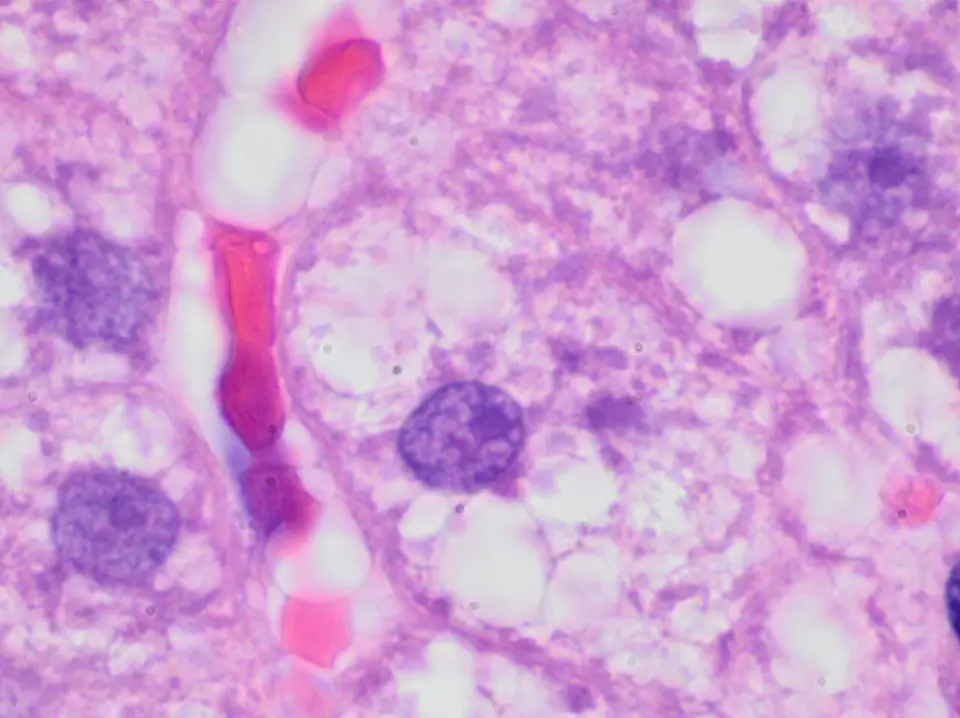
Doença hepática esteatótica associada à Berberina e à disfunção metabólica: análise global dos mecanismos moleculares, desafios translacionais e fronteiras de pesquisa
MedicinaPor ScienceMed · · · a partir do resumo dos autores
Resumo original em inglês
O que aconteceu
Metabolic dysfunction-associated steatotic liver disease (MASLD) has emerged as the most prevalent chronic liver disease worldwide. Berberine (BBR), a bioactive monomer derived from traditional Chinese medicine, demonstrates remarkable multi-target pharmacological properties in regulating glucose and lipid metabolism, ameliorating insulin resistance, attenuating inflammation and oxidative stress, and modulating the gut–liver axis. This study aims to systematically delineate the research landscape, thematic hotspots, and evolutionary trends of BBR in the treatment of MASLD through bibliometric analysis, and to provide an in-depth review of its underlying molecular mechanisms and clinical translational potential, thereby offering a valuable reference for future investigations
A dual-database literature search with cross-validation was conducted in the Web of Science Core Collection (WoSCC) and Scopus, utilizing refined retrieval strategies tailored to the research topic. Bibliometric analyses and network visualizations were performed using R (v4.5.1), VOSviewer (v1.6.19), and CiteSpace (v6.4.R1). Based on these scientometric findings, a comprehensive review of the identified mechanisms and clinical translational potential was subsequently undertaken
O que encontraram
A total of 341 and 624 records were retrieved from WoSCC and Scopus, respectively. Thematic hotspots converged on four major directions: (1) BBR regulates hepatic glucose and lipid metabolism via the AMP-activated protein kinase (AMPK)/Sirtuin 1 (SIRT1), Clock/Bmal1, and farnesoid X receptor (FXR)-Fibroblast Growth Factor 15 (FGF15) signaling pathways; (2) BBR attenuates MASLD progression through Nuclear factor erythroid 2-related factor 2 (Nrf2)/Antioxidant Response Element (ARE)-mediated antioxidant defense and suppression of nucleotide-binding oligomerization domain-like receptor family pyrin domain-containing 3 (NLRP3) inflammasome activation; (3) BBR reshapes gut microbiota architecture, restores mucosal barrier integrity, and modulates hepatic homeostasis via microbiota-derived metabolites along the gut–liver axis; and (4) the clinical efficacy of BBR in MASLD and the development of nano-delivery system-based formulations. Clinical evidence indicates that BBR ameliorates hepatic steatosis and improves metabolic profiles; however, its clinical translation remains constrained by poor oral bioavailability and substantial inter-patient variability in therapeutic response
Por que isso importa
BBR demonstrates a distinct therapeutic profile in MASLD management through the concerted modulation of hepatic metabolism, inflammation, oxidative stress, and the gut–liver axis. Future research should focus on developing innovative drug delivery systems to overcome bioavailability constraints, conducting large-scale, long-term randomized controlled trials to establish long-term efficacy and safety, and implementing precision medicine approaches guided by metabolic phenotyping
Resumo publicado sob licença CC BY. A tradução para o português ainda não chegou a este estudo.
O estudo original
Berberine and metabolic dysfunction-associated steatotic liver disease: a global analysis of molecular mechanisms, translational challenges and research frontiers
Fei Yu, Sihan Yin, Jiayu Zhu, Kewei Sun
Estudos relacionados
- The global epidemiology of nonalcoholic fatty liver disease (NAFLD) and nonalcoholic steatohepatitis (NASH): a systematic review
- Berberine and Adiposity in Diabetes-Free Individuals With Obesity and MASLD: A Randomized Clinical Trial
- The Influence of Berberine on Vascular Function Parameters, Among Them VEGF, in Individuals with MAFLD: A Double-Blind, Randomized, Placebo-Controlled Trial
- HTD1801 demonstrates promising potential for histologic improvements in metabolic dysfunction-associated steatohepatitis in both a preclinical and phase 2 study