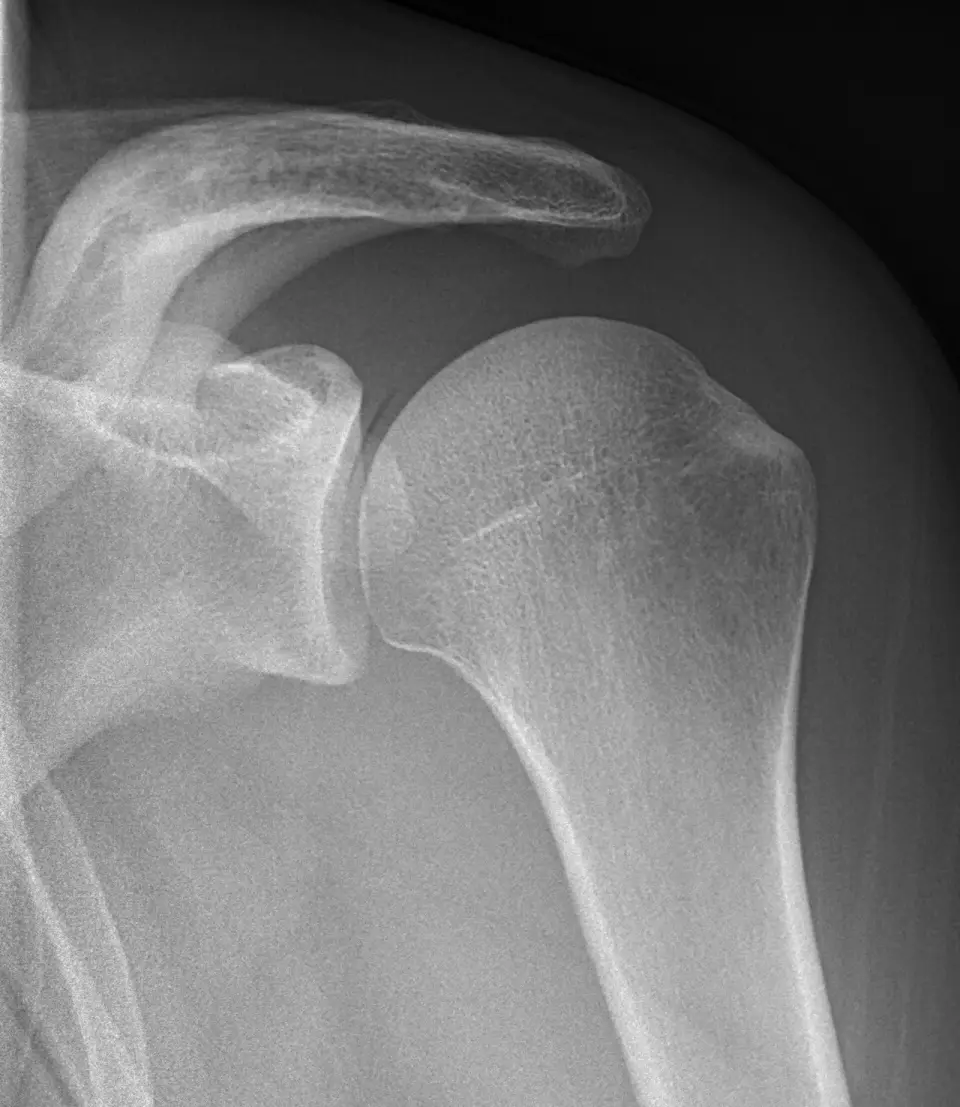
Distal Tibial Allograft for the Treatment of Shoulder Instability Provides Excellent Results With Low Rates of Recurrent Instability: A Systematic Review of Clinical and Biomechanical Studies
OrtopediaPor ScienceMed · · a partir dos dados do estudo
Sobre o estudo
- Desenho
- Revisão sistemática
- Nível de evidência
- 1 · Evidência consolidada
- Revista
- Arthroscopy : the journal of arthroscopic & related surgery : official publication of the Arthroscopy Association of North America and the International Arthroscopy Association
- Publicado em
- 13 mai 2025
- Citações
- 8
O resumo deste estudo é do publisher e não tem licença aberta: por isso mostramos aqui só os dados do estudo, e o texto fica na fonte original, nos links abaixo.
O estudo original
Distal Tibial Allograft for the Treatment of Shoulder Instability Provides Excellent Results With Low Rates of Recurrent Instability: A Systematic Review of Clinical and Biomechanical Studies
Samuel G Lorentz, Eoghan T Hurley, Alex M Meyer, Mark A Glover, Jonathan F Dickens, Matthew T Provencher
Descritores MeSH
- Shoulder Joint
- Tibia
- Bone Transplantation
- Joint Instability
- Shoulder Dislocation
- Allografts
- Humans
- Recurrence
- Treatment Outcome
- Biomechanical Phenomena
Veja também
Estudos relacionados
- Distal Tibial Allograft for the Treatment of Anterior Shoulder Instability With Glenoid Bone Loss: A Systematic Review and Meta-analysis
- Outcomes are comparable using free bone block autografts versus allografts for the management of anterior shoulder instability with glenoid bone loss: a systematic review and meta-analysis of "The Non-Latarjet"
- Clinical outcomes and complications in Latarjet versus free bone block procedures for anterior shoulder instability: a meta-analysis of comparative studies
- Arthroscopic Latarjet Versus Arthroscopic Free Bone Block Procedures for Anterior Shoulder Instability: A Proportional Meta-analysis Comparing Recurrence, Complication, and Reoperation Rates