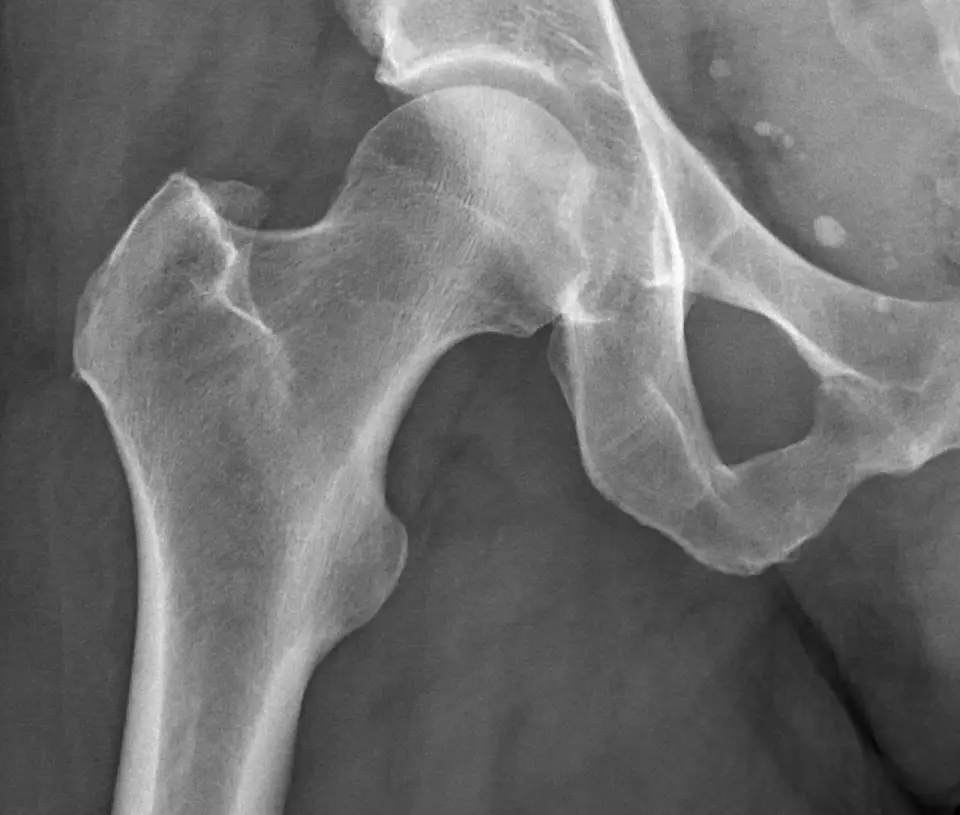
Comparison of low-dose morphine intrathecal analgesia and sufentanil PCIA in elderly patients with hip fracture undergoing single spinal anesthesia - a randomized clinical trial
OrtopediaPor ScienceMed · · a partir do resumo dos autores
Resumo original em inglês
O que aconteceu
The complications of postoperative pain, such as hypertension, hypermetabolism, irritability, and postoperative cognitive dysfunction, significantly affect the postoperative rehabilitation of elderly patients. Intrathecal morphine prolongs analgesia after surgery, but has been implicated in nausea and vomiting, pruritus, postoperative respiratory depression, or apneic episodes. The present study explored the effect and safety of low-dose morphine used adjunctively with bupivacaine during single spinal anesthesia or sufentanil patient-controlled intravenous analgesia (PCIA) in elderly patients with hip fracture surgery. Since elderly patients often need anticoagulant therapy in the early postoperative period, single spinal anesthesia was involved in completing the operation in this study.
Eighty elderly patients aged 70-85 years who underwent elective hip fracture surgery with single spinal anesthesia were divided into two groups, 12.5 mg of 0.5% hyperbaric bupivacaine with 100 µg of morphine (morphine group, group M) and 12.5 mg of 0.5% hyperbaric bupivacaine with 100 µg of sufentanil PCIA (sufentanil group, group S). The analgesia scores using the visual analogue scale (VAS), the Brinell comfort scale (BCS) were evaluated at 6, 12, 24, and 48 h after operation, and adverse reactions were recorded such as nausea and vomiting, pruritus, sedation, respiratory depression, and POD (postoperative delirium) with Delirium Rating Scale-r 98.
Registered with the Chinese Clinical Trial Registry under ChiCTR2100042706 . 26/01/2021.
O que encontraram
Within 24 h after operation, the analgesic and BCS scores of group M were better than those of group S (P < 0.05). Group M had higher frequency of skin pruritus than group S within 24 h, and the difference was statistically significant. The incidence of POD in group M (2 cases) was lower than that in group S (6 cases) (5.71% vs 18.18%) (P < 0.05) with the DRS-r 98 scores. No significant difference was observed in nausea and vomiting between the two groups, and the difference of severe respiratory depression was not found in both groups.
Por que isso importa
Compared with sufentanil PCIA, low-dose intrathecal morphine has a satisfactory analgesic effect, and little effect on the patient's cognitive function with low medical cost. Under effective respiratory monitoring, it can be used safely and effectively in elderly patients with hip fracture.
Resumo publicado sob licença CC BY. A tradução para o português ainda não chegou a este estudo.
O estudo original
Comparison of low-dose morphine intrathecal analgesia and sufentanil PCIA in elderly patients with hip fracture undergoing single spinal anesthesia - a randomized clinical trial
Zhifei Xu, Zairong Tang, Juan Yao, Dongliang Liang, Feng Jin, Ying Liu, Kai Guo, Xiulu Yang
Descritores MeSH
- Respiratory Insufficiency
- Hip Fractures
- Anesthesia, Spinal
- Delirium
- Morphine
- Nausea
- Postoperative Complications
- Pruritus
- Vomiting
- Analgesia, Patient-Controlled
Veja também
Estudos relacionados
- Comparison of the Efficacies of Three Different Intrathecal Doses of Morphine in Achieving Postcesarean Delivery Analgesia
- Intrathecal morphine versus transversalis fascia and transversus abdominis plane blocks combination on obstetric quality of recovery after cesarean delivery: a randomized controlled trial
- The effect of adding lateral femoral cutaneous nerve block to pericapsular nerve group (PENG) block in hip surgery on postoperative morphine consumption: A randomized controlled trial
- Comparison of pericapsular nerve group block and anterior quadratus lumborum block for hip fracture surgery: a randomized clinical trial